How to Solve Difficult Problems in Refining and Chemical Processes

Many persistent process problems in refineries and petrochemical plants trace back to insufficient understanding of the relevant chemistry, hydrodynamics, or the interaction between the two. Whether the issue shows up as fouling, instability, sudden shift in unit op performance, or product quality, the solution almost always requires subject matter expertise and either experimentation or modeling. Workarounds may reduce the anguish temporarily, but they do not eliminate the defect. To solve difficult problems permanently, you must understand the fundamentals of your chemistry and fluid flow.
Key takeaways
- Many difficult problems persist due to insufficient knowledge of your chemistry or hydrodynamics. In many cases, chemistry and hydrodynamics combine to cause difficult problems.
- It is necessary to have subject matter experts (SME) on your team that comprehend chemistry and hydrodynamics.
- Fixing a difficult problem without either experiments or modeling is very rare.
Why persistent chemical process problems don’t go away
“Negative expectations yield negative results. Positive expectations yield negative results.” (Nonreciprocal Laws of Expectations)
“Murphy was an optimist.” (O’Toole’s Commentary)
It is understandable if you are pessimistic when there are difficult, persistent problems in your refinery or chemical process that linger for a long time, perhaps decades. By definition, they have no apparent solution. Workarounds – such as blending off-spec material into prime, extra cleanouts, or early preventative maintenance – may be used, but these add complexity, cost, and hazards to your process. These problems may occur infrequently, at seemingly random times. A high-priority team may be formed at each instance, and multiple actions are taken in response, reflecting what the team thinks they know. If the plant is lucky, the problem works its way out of the system – but no one knows whether the team’s actions had any effect.
My favorite pessimistic term used by a plant was a “punt”. The punt occurred when reactor control was lost, and the reactor was emptied to scrubbers and flare before more serious consequences could occur. As you can imagine, the punt was extremely costly.
On a more optimistic note, Hoare’s Law of Large Problems states, “Inside every large problem is a small problem struggling to get out.” I believe this is absolutely true in refineries and chemical processes; the root cause of a difficult problem often has a simple fix. In this blog I argue, based on my own experience, that essentially every difficult problem is due to lack of sufficient knowledge of either your chemistry or hydrodynamics. In many cases, chemistry and hydrodynamics combine to cause the problem.
I define chemistry as broadly including reaction pathways, associated thermodynamics and reaction rates, and physical properties. Hydrodynamics covers where material in your process goes, at what velocity, and the various stresses it can put on your physical assets. The “where your material goes” includes how and when multiple phases are dispersed in your processes. I include heat and mass transfer as part of hydrodynamics since Nusselt and Sherwood number correlations are (in part) a function of Reynolds number.
I offer two corollaries:
1. It is necessary to have subject matter experts (SMEs) on your team that comprehend chemistry and hydrodynamics.
In a previous Becht blog, a diverse team was compared to a symphony orchestra. I am somewhat of a musician myself and I can tell you that missing certain instruments in an orchestra is a problem; a Mahler symphony would never sound right without French horns, no matter how hard the other instrumentalists try. The value of working with people that have seen similar problems in other plants, perhaps even in other industries, cannot be overstated. Becht has 1,000+ experts that can contribute on short notice.
The team needs to agree on the definition of the defect and what success looks like. The fun part for technical people is developing a list of hypotheses. I have seen problems with many hypotheses generated by SMEs, and that’s great. A book written by my former colleagues at The Dow Chemical Company [1] discusses at length the process of building and eliminating hypotheses, and I invite the reader to consult that resource.
2. Fixing a difficult problem without either experiments or modeling is very rare.
“To find out what happens to a system when you interfere with it, you have to interfere with it.” (George E. P. Box)
Stated in a less elegant way, “If you want to improve the output of your process, you need to change something about your process.” Experiments can be done at the plant, pilot, or lab scale. Scaled-down studies don’t need to exactly duplicate the plant; the experiment only needs to re-create the environment that creates the defect. Modeling allows you to interfere numerically with your process. Experimentation and modeling can offer a synergy, not the least of which is validation.
Real examples of chemistry and hydrodynamics causing process defects
To give you some hope, let’s discuss some success stories.
“The shortest distance between two points is zero.” (Dr. Weir, Event Horizon)
- In the example pictured below, a gas phase polymerization reactor used a liquid catalyst injected via a gas-assisted spray nozzle [2, 3]. The plant had a lingering problem of popcorn type particles amongst their prime polymer. SMEs in fluid dynamics hypothesized that it was related to the custom-made spray nozzle. A lab setup with a plant nozzle replica and high-speed imaging showed ca. 50 Hz pulsations with some pulsations showing very large droplets. Large catalyst droplets were reasoned to give popcorn polymer, and the design of a pulseless nozzle eliminated the reactor problem. This is an example of chemistry and hydrodynamics combining to cause a problem; in this case, fixing the hydrodynamics made the chemistry behave.
- Other examples of chemistry and hydrodynamics working together include erosion-corrosion (flow strips a protective layer on a metal surface, leaving it open to chemical attack), and backflow of a reactive solution into a catalyst injector (premature mixing causes excess polymerization locally and subsequent plugging). Backflow can also result in very serious safety incidents.

Figure 1: Spray nozzle images demonstrating nozzle flow and drop size variability
- A trace impurity in a raw material feed was found to be a heterogeneous catalyst poison. This was recognized from the chemical literature, which indicated that the catalyst functional group could react with the trace functional group in a deleterious (albeit very slow) manner. The problem here was that the poison was recycled to the reactors from a separation unit. The poison’s only way to leave the process was to react with the catalyst active site. By slightly altering the operation of the separation unit, a lesser amount of the catalyst poison was recycled back to the reactors, and dramatically higher catalyst life ensued. This is an example of knowledge of trace-level chemistry solving the problem; the flow through the catalyst bed was unaltered.
- Another example for chemistry is off-spec color, in which color bodies are present at ppb levels due to the introduction of impurities such as oxidizing agents, as well as many other problems with byproducts such as when catalyst goes astray.
- A plant was having trouble with noise in a slurry tank’s level reading as well as abrasion in the bottom tank head [3]. We suspected under-baffling and scaled down to a 20-gallon tank based on constant Froude number. Figure 2 below shows the result. What the single image doesn’t capture is that a “tidal wave” traversed tangentially around the deep vortex with a ca. 1 Hz frequency. The problem was worse than we anticipated. The under-baffling caused under-suspension of the solids and explained the abrasion near the bottom of the tank. As you can imagine, a video like this convinces the stakeholders Q.E.D. that investment in change is required. This is an example of knowledge of hydrodynamics solving a problem.
- An additional example for hydrodynamics is sudden phase change that leads to hammering. See [4] for excellent insight on this topic. Still another example is droplet entrainment causing liquid to travel where only gas is designed for.
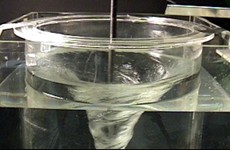
Figure 2: Experiment in a 20-gallon tank demonstrating the source of plant problems
When solutions are clearly presented to decision makers, a proper study and presentation leads them to draw the same conclusions you have already made. This leads to rapid investment in process change.
Common chemical process defects caused by chemistry or hydrodynamics
To show you that you are not alone, I have compiled a partial list of the numerous process defects that I have encountered in my career:
- Equipment and mechanical issues – fouling; corrosion (including localized column corrosion); material failures leading to chemical exposure or environmental leaks; vibration; cavitation near mixing impellers; and rotating equipment failures.
- Flow and mixing problems – flow instabilities; feed maldistribution affecting column performance; loss of aeration efficiency; inefficient solids wetting; excessive blend times (one week in a recirculation tank); and bypassing through a large storage tank due to inlet and outlet nozzles in close proximity.
- Solids, filtration, and separation challenges – particles in filtrate; excessive solvent left on particles; particle breakage (including in packed beds); fine particulates that can’t be recovered; high molecular weight gels; faulty crystal size distribution; solids deposition when draining tanks; and emulsions that won’t break.
- Catalyst and chemistry surprises – sudden excess local reactivity; temperature rise via sudden (unexpected) gas pressurization; leaching of reactive material; raw material supplier changes introducing trace impurities; lethal reactions in non-reactors; and seasonal operating differences.
- Startup and product quality issues – startup failures (inability to reach steady state); foaming; off-colored specks; off-spec assay; and bubbles in molded products.
Contact Becht if you want to talk more!
References
-
-
- Stefanov, Z. I., et al., Fundamentals of Industrial Problem Solving: A Practitioner’s Guide, Wiley, Hoboken, New Jersey, 2022.
- Khopkar, A., Cloeter, M.D., Yuan, Q., “Industrial Sprays: Experimental Characterization and Numerical Modeling,” chapter in Applied Computational Fluid Dynamics, H.W. Oh, ed., Intech, March 2012.
- Cloeter, M.D., You Can Observe A Lot Just By Watching; Industrial Problem Solving via Physical Modeling and Flow Visualization, 2007 AIChE Annual Meeting, Session 550.
- Kirsner, Wayne. “Condensation-induced waterhammer,” Heating, piping and air conditioning71, no. 1 (1999): 112-122.
-
Like what you just read? Join our email list for more expert insights and industry updates.