Southeast Asia’s Energy Resilience Test: Lessons from the 2026 Crude Supply Shock
The 2026 crude supply shock exposed significant vulnerabilities in Southeast Asia’s energy supply chain. The experience is also pushing refiners and governments to develop greater flexibility that could strengthen the region’s response to future disruptions.
Key takeaways
- Southeast Asia’s dependence on Middle Eastern crude left regional refiners exposed to disruption in the Strait of Hormuz.
- Alternative crude supplies created new operating challenges for refineries configured around Middle Eastern grades.
- Energy disruption can extend into food supply when fertiliser production or delivery is affected.
- ASEAN initiatives could strengthen regional resilience by improving energy connectivity and supply cooperation.
- Changing crude diets are building valuable operating experience that can help refiners respond to future disruptions.
The old adage popularly, but falsely, attributed to Winston Churchill, “Never let a good crisis go to waste,” has experienced a resurgence in use in recent times. In 2026, Southeast Asian nations that had just navigated the impact of global trade tensions on their manufacturing sector were suddenly faced with a new challenge. The conflict between the US and Iran and subsequent restriction of movement through the Strait of Hormuz of crude cargoes bound for their refineries threw economies into varying states of apoplexy. Before the conflict, approximately 60 percent1 of crude processed by the region’s refineries came from the Middle East, mostly via the Strait of Hormuz. That such a vulnerability exists is perhaps indicative of the hitherto complacency within the industry with respect to supply chain risk.
How the Strait of Hormuz closure disrupted regional refining
The physical shortage quickly became an operational problem. In March, it was reported that many of the region’s refiners were being forced to reduce production and, in some instances, shut down process units2. Replacing Middle East crude is not simply a purchasing exercise. Many regional refineries are configured for Middle Eastern grades. Substituting alternative crudes changes distillation yields, hydrogen consumption, sulphur recovery loading, catalyst performance and the balance between gasoline, diesel and fuel oil. Cargoes also travel further and attract higher freight, insurance and financing costs. The broader consequences included tighter supplies of diesel, jet fuel, LPG and petrochemical feedstocks.
Why fertiliser and food supplies are also at risk
The disruption also extends beyond energy and petrochemicals into fertiliser and food supply chains3. The Gulf is an important producer and exporter of urea and ammonia, while substantial volumes of sulphur – an essential feedstock for phosphate fertiliser production – normally pass through the Strait. Natural gas is also the principal feedstock and energy source for ammonia manufacture. The disruption therefore affects fertiliser supply through three channels at once: restricted shipment of finished products, reduced availability of essential feedstocks and higher production costs. Because fertiliser application is tied to crop calendars, delayed deliveries can reduce agricultural yields and tighten food supplies long after energy shipments begin to recover.
ASEA responds with policy and trade cooperation
In response to these supply shocks, there was an immediate flurry of diplomatic and governmental activity as the region realised that navigating this new crisis would potentially require cross-border cooperation. At the policy level, ASEAN ministers aligned on a number of initiatives and mechanisms aimed at ensuring security of supply to member states. The ASEAN Petroleum Security Agreement (APSA) is one example to come from this dialogue. At this stage, any action taken under the umbrella of APSA is entirely voluntary. Developing binding rules and criteria for action lies in the future.
In addition, many other long-standing initiatives aimed at reducing reliance on out-of-region fossil fuels were reinvigorated. Notable examples include a regional electricity grid, gas transmission between members and increased biofuel coordination. Of these, the electricity grid is the most advanced, as a number of bilateral and trilateral interconnections are already operational. However, the system still has a long way to go until it is fully integrated across ASEAN, with much of the challenge ahead involving trading mechanisms, regulation and investment requirements for the interconnectors. It remains to be seen whether recent events really will provide the accelerator for these initiatives to deliver meaningful outcomes. If nothing else, it has opened and renewed communication channels regionally and broadened scope for regional trade cooperation within ASEAN and beyond – and that is surely positive.
Since the early 2000s, much effort was focused on establishing robust free trade agreements between ASEAN members and their APAC neighbours. These are now proving their worth. For example, New Zealand’s Comprehensive Strategic Partnership with Singapore underpins energy and food security in both nations and has seen trade values double in as many years. Similar agreements involve Malaysia, Thailand, India, Vietnam, China, Australia and others.
Adapting the crude diet inside the region’s refineries
Away from the formality and red carpets of regional diplomacy and trade deals, down amongst the pipework of the region’s refineries, equally enlightening interactions are occurring. Crude diets have by necessity changed and continue to change. Operators did what they could to source cargoes appropriate to their refinery configuration. Some negotiated fees to secure safe passage of cargoes through the Strait, whilst others looked to Russia to meet needs despite the geopolitical risk. The vast majority of alternative supply came, however, from the USA, West Africa and within the region itself. Refinery LP models, unit constraints and performance, together with optimising feed and output of the cash-generating upgrading units, have been at the forefront of operators’ minds for the past few months. Schedulers, process technologists, maintenance engineers and those unsung heroes of the refinery, the corrosion engineers, are learning new things about crude compatibility and fouling (did someone mention WTI?), co-processing in the FCCU and how to handle mercury in condensates, for example. This will inevitably drive competency development and lead to a more resilient and adaptable industry across ASEAN, ready to address future crises.
Lessons in resilience from the ground
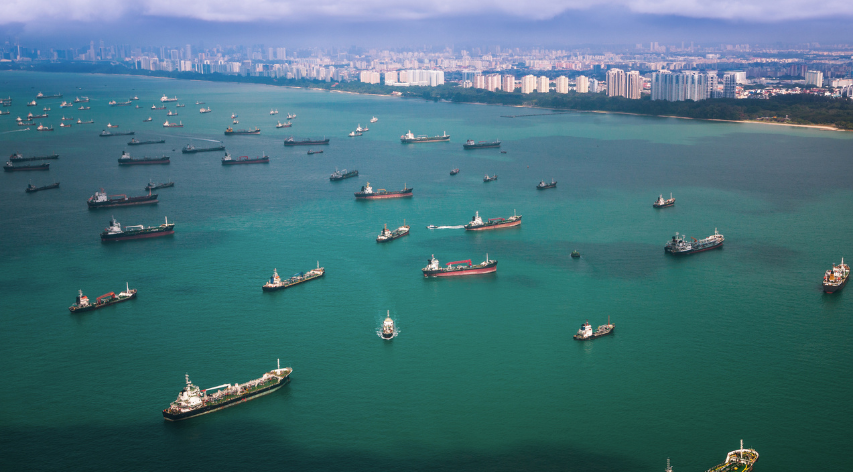
On a recent regional flight across a body of water (just beyond territorial limits) notorious for commercial activity of questionable integrity, I noticed two tankers anchored alongside. I was reminded of my time living and working in Singapore. Opposite my house was a small coffee shop whose owner consistently supplied me with excellent teh tarik accompanied by kaya toast (cash only). His was not an easy life, but he knew a thing or two about supply chains. On enquiring about the state of business, he would give the slightly evasive, but staple answer, “Can survive lah.” ASEAN has proven through this crisis and many before that it can not only survive, but has all it needs to thrive.
Becht works alongside refiners and energy companies across the region to navigate exactly these kinds of challenges. If your operations are adapting to a shifting crude slate or looking to build greater resilience into your supply chain, get in touch with our team to discuss how we can help.
References
1https://www.iea.org/reports/southeast-asia-energy-outlook-2026 (licence: CC BY 4.0)
Like what you just read? Join our email list for more expert insights and industry updates.