Renewable Feedstocks Explained: The Starting Point for Synthetic Fuel Production
By Scott Sayles, Robert Ohmes, Pattabhi Raman Narayanan, and Jessica Hofmann
Renewable feedstocks provide the starting material for synthetic fuel production. Understanding feedstock characteristics helps determine the appropriate processing pathway and can influence the carbon lifecycle of the finished fuel.
Key takeaways
- Feedstock selection is an early decision that influences the synthetic fuel production pathway.
- Seed oils and animal fats are commonly processed through hydroprocessing or FCC pathways.
- Feedstock properties affect preparation requirements and downstream processing.
- Residual biomass can provide a productive use for renewable waste materials.
- Renewable feedstock eligibility continues to evolve as fuel regulations change.
The success of a synthetic fuel project often depends on one of its earliest decisions: selecting a feedstock. Understanding the characteristics of the feed helps establish an appropriate processing pathway long before detailed engineering begins. Feedstock properties influence process design and can affect how the finished product is evaluated under renewable fuel programs.
This blog is the first in a three-part series on renewable processing. It introduces the major categories of renewable feedstocks used in synthetic fuel production. The next article will examine the major technologies used to convert these feedstocks into renewable fuels, and the series will conclude by exploring the fuel products they produce.
What are renewable feedstocks?
Renewable feedstocks are materials that can be converted into synthetic fuels while supporting a circular economy, where renewable resources and waste materials are recovered and put to productive use rather than discarded.
The definition of which feedstocks qualify for renewable credits continues to change as regulations develop. The choice of feedstock plays an important role in determining the carbon lifecycle of the finished fuel. For example, woody waste can be converted into renewable fuels with a carbon value that is close to net zero because the carbon originates from recently grown biomass rather than fossil sources.
Renewable feedstock categories
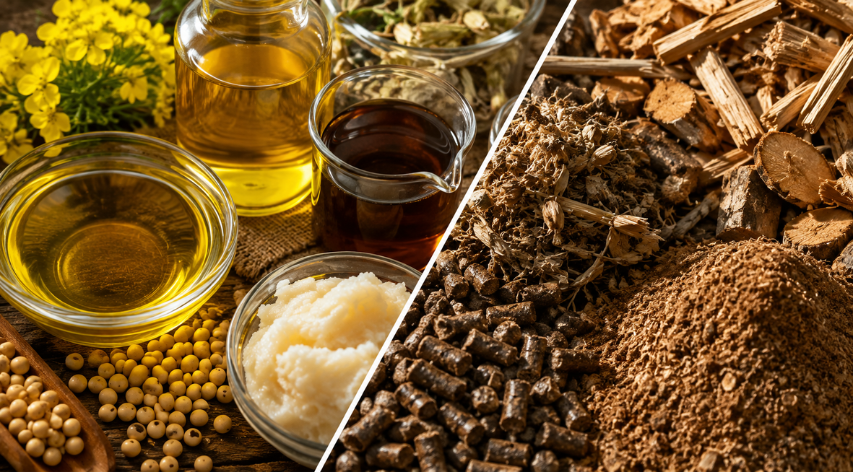
Renewable feedstocks used for synthetic fuel production generally fall into two primary categories: seed oils and animal fats, and residual biomass. Each category presents different opportunities and technical considerations for downstream processing.
Seed oils and animal fats
Seed oils and animal fats are among the most common feedstocks used for renewable fuel production. These materials consist primarily of triglycerides and are commonly processed through hydroprocessing or fluid catalytic cracking (FCC) pathways.
Common examples include:
- Soybean oil
- Rapeseed (canola) oil
- Corn oil
- Tall oil fatty acid (TOFA)
- Used cooking oil (UCO)
- Animal fat (tallow)
Although these feedstocks all contain triglycerides, they differ in properties such as free fatty acid content, sulfur concentration, moisture content, and fatty acid distribution. These characteristics influence feed preparation and downstream processing. Table 1 summarizes several commonly used renewable feedstocks and their properties.
Emerging feedstocks also include byproducts generated during seed oil production and processing, creating additional opportunities to recover value from existing agricultural operations.
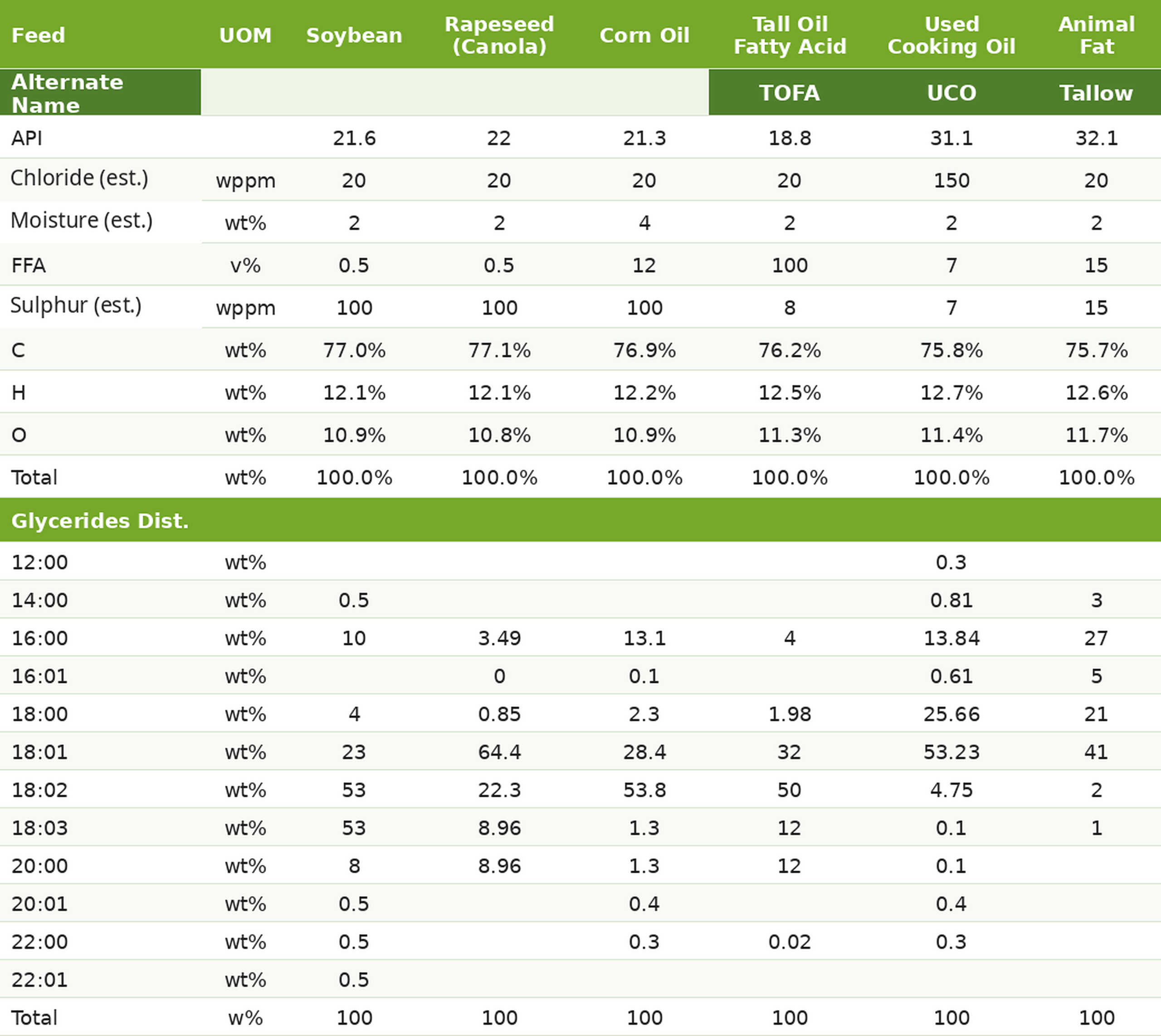
Table 1: Typical renewable feeds – Seed oils and animal fats
Residual biomass feedstocks
Residual biomass includes renewable materials generated as waste or byproducts from industrial, agricultural, or municipal activities. Since these materials are no longer intended for food or other commercial uses, they offer an opportunity to convert renewable carbon into valuable fuel products.
Common examples include:
- Filtered oil and grease (FOG)
- Palm oil mill effluent (POME)
- Woody waste
- Biomass produced by microbes
Residual biomass feedstocks vary significantly in composition. Some can be processed using pathways similar to seed oils, while others require additional preparation before they can be converted into transportation fuels or renewable chemicals. For instance, woody biomass requires intermediate processing before downstream fuel production can occur.
Building the right foundation
Renewable feedstocks establish the foundation for synthetic fuel production. Understanding their characteristics helps organizations identify appropriate processing pathways and make more informed technical decisions as projects move forward. The next article in this series will examine the technologies used to convert these feedstocks into renewable fuels.
Considering a renewable fuels project? Becht helps clients evaluate every stage of renewable fuel production, from feedstock selection through technology evaluation and implementation. Contact us to start the conversation.
Like what you just read? Join our email list for more expert insights and industry updates.