A Practical Path to Digital Transformation in Refining

By Kevin Smith and Katie Taylor
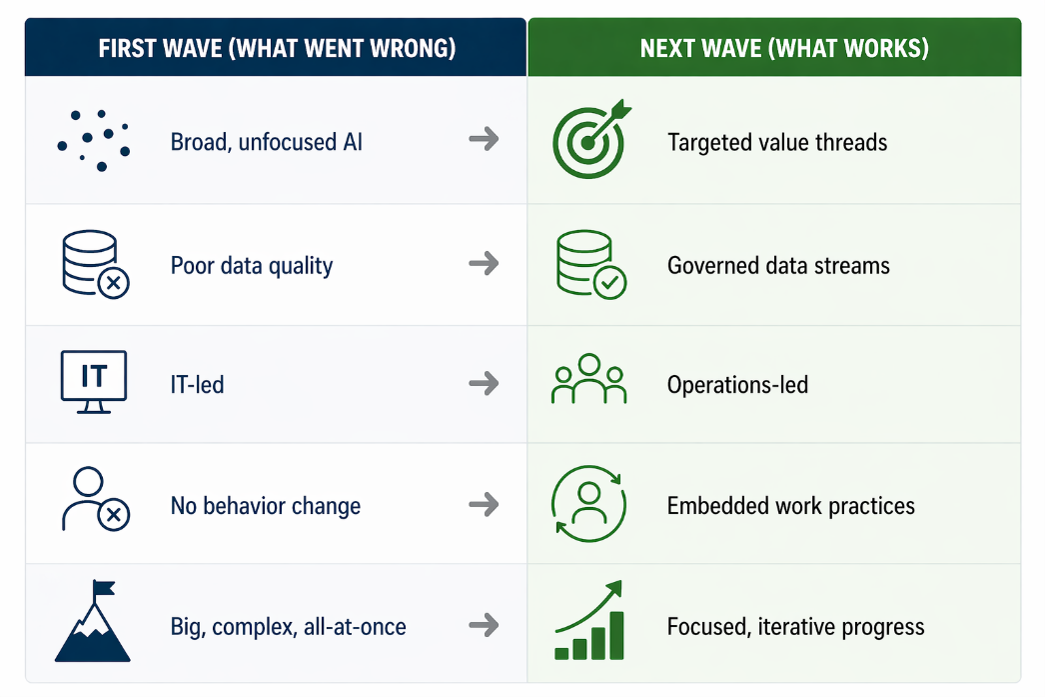
Despite significant investment in digital tools, most organizations have yet to realize meaningful, enterprise-scale value from digital transformation in refining. From digital twins to AI and machine learning applications, adoption has increased, but results have largely been incremental. The gap between promise and performance remains. In many cases, previous approaches focused on tools instead of value and relied on low-quality or fragmented data, without changing how work gets done in the field.
Our new white paper, Digital Disruption in Refining: A Practical Roadmap for AI-Driven Transformation, takes a deeper drive into why early digital efforts fell short and outlines a more practical path forward.
Start with focus, not tools
Many initiatives aimed too broadly, applying advanced analytics without clearly defining where value would be created. This often led to solutions that were technically impressive but disconnected from measurable performance improvement.
Successful efforts begin with targeted value threads tied directly to operational outcomes. Clear focus increases the likelihood of adoption and sustained impact.
Build on data you can trust
Digital solutions are only as effective as the data behind them. Fragmented systems and inconsistent data streams limit the reliability of insights and reduce confidence in the results.
Organizations that see value prioritize data governance and streamline inputs. They also ensure the data supports the people responsible for making decisions.
Let operations drive priorities
Digital programs often followed IT roadmaps rather than operational constraints. As a result, solutions did not always address the real limitations affecting performance.
The most effective transformations are grounded in the realities of the plant. Priorities are set based on where improvements will have the greatest operational impact.
Make behavior change explicit
Technology does not improve performance on its own. Value is realized only when it changes how people work, which requires clear expectations and reinforcement.
Defining expected behaviors and embedding them into daily routines is a critical step that is often overlooked. Without this, even well-designed solutions struggle to deliver sustained results.
Scale through momentum, not complexity
Large initiatives frequently struggled to deliver, particularly when scope and complexity outpaced the organization’s ability to adopt them. This created frustration and reduced confidence in future efforts.
A more effective approach starts with targeted efforts that demonstrate value early. These early wins build momentum and support broader transformation over time.
Digital transformation in refining is an operating model shift
The organizations that outperform will be the ones that integrate digital capabilities into how decisions are made and how work is executed. Sustained value can only be realized when digital becomes part of the operating model. This shift is what ultimately separates incremental improvement from meaningful transformation.
You can read the full digital transformation in refining white paper here (no registration required).
And if your team is working to move from digital pilots to measurable performance gains, Becht’s experts are available to provide perspective and support.
Like what you just read? Join our email list for more expert insights and industry updates.