When Critical Speed Becomes a Hidden Risk in Rotating Equipment Startups
Critical speed becomes a significant risk during rotating equipment startups when machinery operates too long within a speed range associated with elevated vibration. Understanding rotordynamic behavior and incorporating appropriate operating limits into startup procedures can help prevent costly equipment failures.
Key takeaways
- Rotating equipment can experience damaging vibration when operating within a critical speed range.
- Startup procedures must account for the full critical speed range to prevent machinery damage.
- Inadequate speed monitoring can delay operator response during rapidly changing conditions.
- Accurate maintenance documentation is essential for identifying potential mechanical risks before startup.
- Rotordynamic analysis and appropriate control systems help operators manage critical speed risks.
Post-turnaround startups place rotating equipment in some of its most vulnerable operating conditions. If critical speed behavior isn’t fully understood or clearly translated into startup procedures, even experienced teams can unknowingly place machinery at risk. This is especially true for older assets that were designed and documented under very different expectations than those that exist today.
That risk became very real at a refinery where a Powerformer recycle gas compressor experienced an acute failure during a post-turnaround startup. The event ultimately resulted in irreparable damage and prompted a Root Cause Failure Analysis (RCFA).
The recycle gas compressor was installed in 1968 and had a long history of reliable operation. After a planned refurbishment was completed by OEM service technicians, the compressor was successfully restarted but subsequently tripped due to a process event. During the ensuing startup, the compressor suffered a critical mechanical failure.
What caused the compressor failure during startup?
The investigation revealed that several contributing factors aligned during startup. While none of these issues were extraordinary on their own, their combined effect created a high-risk operating condition that wasn’t immediately apparent to the operating team.
Wide critical speed range
The first critical speed range for this compressor, including the ramps, was unusually wide. Vibration occurs throughout the critical speed range with varying intensities, and operating within this range can result in internal contact between the rotating and stationary components – often leading to immediate damage. The width of this critical speed range wasn’t adequately considered during development of the startup procedure. The issue was only discovered during a review of the coast-down vibration data (shown in Figure 1), as a rotor response curve was not available for this application.
Startup procedure
The startup procedure for the compressor called for a hold point just above 5200 rpm, which is below the machine’s stated critical speed of 5900 rpm. As the machine approached this speed, vibration levels began to increase, so operators stopped the speed escalation and put a hold on the compressor.
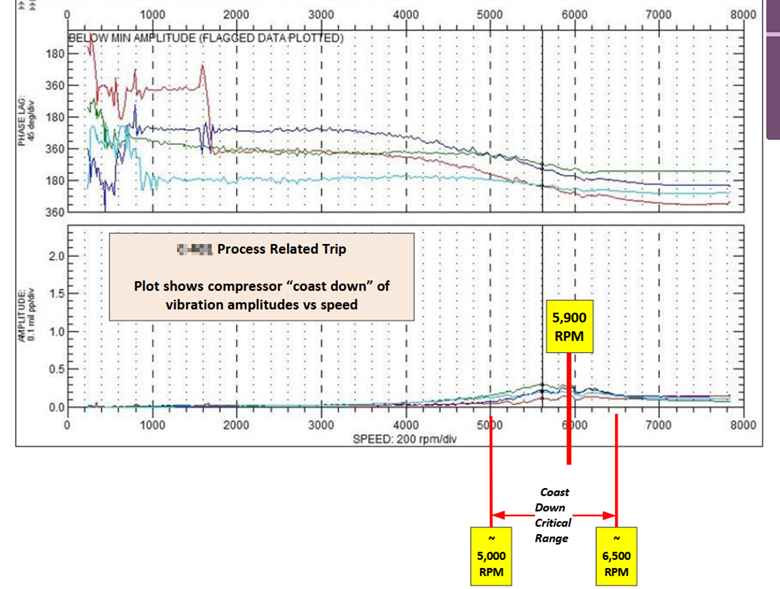
Figure 1: Compressor coast-down of vibration amplitudes vs. speed
Lack of local tachometer
The compressor was driven by a steam turbine with a manual speed control located near the turbine. There was no local tachometer to monitor the compressor’s speed from the compressor deck. Instead, operators relied on communication with the control room to determine compressor speed, which delayed decision-making during a rapidly changing operating condition.
Cumbersome speed control system
The manual speed control system for the steam turbine lacked precision, making it difficult to regulate turbine speed accurately. Small adjustments led to significant changes in speed and further complicated operations. As a result, the compressor lingered in the critical speed range for a significant length of time, leading to elevated rotor vibration.
No automatic high vibration shutdown
Although the compressor vibration data was read and transmitted to the control room, the system was configured only with an alarm – not an automatic shutdown on high vibration. Operator intervention was required, but this didn’t occur for a significant period of time after vibration levels became excessive.
Inadequate labyrinth clearances
Inconsistencies were found in the measurement and documentation of labyrinth seal clearances during the overhaul. These discrepancies may have resulted in tighter-than-normal clearances on the labyrinths, which potentially contributed to internal rubbing issues observed during startup.
What can operators and engineers do to better manage critical speed risk?
This event highlights the importance of ensuring that startup procedures fully account for rotordynamic behavior and that operators are equipped with both the information and tools needed to respond quickly.
First, verify that all startup procedures provide operators with the necessary knowledge and steps to clearly identify and avoid critical speed windows throughout all phases of operation. To do this, a technically qualified person should:
- Review the machine rotordynamic report
- Analyze the critical speed window with respect to the startup practices and normal operating practices
- Analyze the control narrative for each body in the train
- Review the procedure and add the operating envelopes for each stage of startup, with specific actions identified if the compressor moves out of bounds
Dimensional information in repair reports should also be verified for accuracy and consistency, with clear acceptance criteria documented. Any discrepancies should be addressed through appropriate Management of Change processes.
If rotordynamic reports aren’t available, field testing can be performed in the field by a qualified Level 4 Vibration Technician. This testing should be planned during a turnaround opportunity in which the machine will be shut down and restarted. Alternatively, work with an OEM or qualified third-party service company to build a rotordynamic analysis. On older machines, this often requires blueprinting the machine train due to a lack of original construction files and/or documented modifications.
Additionally, confirm that operators are supported by effective technology and work procedures. Field operators should monitor speed accurately throughout the startup and shutdown processes. They will need accessible instruments such as local tachometers and the necessary training to recognize developing issues and intervene sooner.
In some cases, a control system upgrade may be warranted. Modern control technology can automate the process and remove risks, allowing operators to focus on other important monitoring activities during startup.
Final words of wisdom: Rotating equipment reliability
This compressor failure serves as a reminder that technical competency and real-time awareness, backed by automated controls, are essential to the reliability of complex machinery. Strengthening the procedures that guide this work is far less costly than repairs combined with production losses. API RP 687 Annex J provides critical machinery engineers and machinery turnaround planners with practical guidance for managing machinery risk throughout the lifecycle. Alongside that guidance, thorough documentation is essential: for critical machines, every aspect of the maintenance process should be recorded. Photographs are free and invaluable during future work.
Putting these practices into action is easier with experienced machinery engineers alongside your team. Becht’s owners’ engineer expertise helps clients strengthen maintenance practices through mentoring and technical consultation, with strategic playbooks to inform the work. There’s no need to reinvent the wheel. Reach out to Becht and get the blueprints for reliable operation.
Like what you just read? Join our email list for more expert insights and industry updates.