Tank Integrity Risk-Based Programs: Moving Beyond Compliance to Smarter Risk Management
Tank integrity risk-based programs help operators prioritize inspection and maintenance activities based on the actual risks associated with individual storage tanks. By evaluating failure likelihood and potential consequences, these programs enable more effective resource allocation while maintaining applicable regulatory requirements.
Key takeaways
- Tank integrity Risk-Based Management (RBM) programs prioritize storage tank risks based on likelihood and consequence of failure.
- Traditional compliance-based inspection programs may not adequately reflect differences in risk across a tank fleet.
- Risk-Based Inspection (RBI) helps operators tailor inspection strategies to specific damage mechanisms.
- Reliability-Centered Maintenance (RCM) focuses on identifying recurring equipment problems and eliminating defects.
- Integrating risk assessments with maintenance planning helps direct resources toward the highest-risk assets.
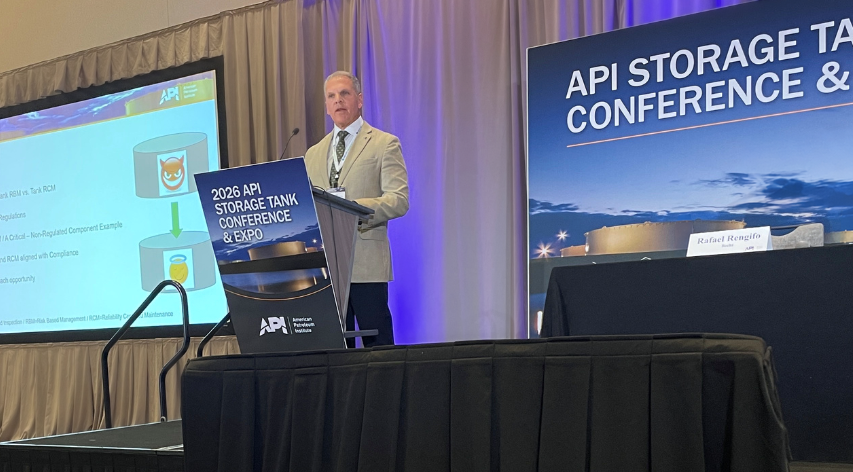
This blog is adapted from Rafael Rengifo’s presentation at the 2026 API Storage Tank Conference & Expo, which explored how risk-based programs can help operators strengthen tank integrity and make more effective inspection and maintenance decisions.
Storage tanks are among the most critical assets in the refining, petrochemical, terminal and midstream industries. They store large inventories of hydrocarbons and chemicals, often for decades. Maintaining their integrity is essential to safe, reliable operations and helps protect the environment and business performance.
Historically, tank inspection programs have been driven primarily by regulatory requirements and fixed inspection intervals. While this approach has served the industry well, many operators are discovering that a purely compliance-based strategy does not always provide the most effective allocation of inspection resources or the best understanding of asset risk. Many bad actor tanks still lack a clear mitigation plan, while good actor tanks continue to be treated as “bad guys.”
A tank integrity risk-based program provides a structured methodology for identifying, assessing and managing tank risks so that inspection and maintenance efforts are focused where they are needed most. By combining engineering knowledge, damage mechanism assessment, historical data and consequence analysis, organizations can make more informed decisions.
Why traditional inspection programs have limitations
Most facilities operate under inspection requirements established by industry standards such as API 653. These requirements provide a valuable framework for maintaining storage tank integrity, but are generally centered around prescribed inspection activities and maximum inspection intervals. Prescribed activities from industry standards can become the default approach in a “regulatory-justified comfort zone” that leaves risk reduction and improvement opportunities out of the equation. In practice, not all tanks present the same level of risk, which may warrant different inspection and maintenance strategies.
For example, a recently constructed diesel storage tank with robust corrosion controls likely poses significantly less risk than an aging crude oil tank operating in a corrosive service. Yet under a traditional inspection strategy, both tanks may receive similar attention simply because they fall under the same regulatory framework. This often produces two common challenges:
- Low-risk tanks may receive inspections that provide limited additional value.
- Higher-risk tanks may require increased monitoring, mitigation or inspection beyond minimum requirements.
Risk-Based Inspection helps address this imbalance by focusing on the assets that contribute the greatest overall risk to the facility.
What Is tank integrity Risk-Based Management?
A tank integrity Risk-Based Management (RBM) program is a systematic process used to evaluate and prioritize storage tank risks. Rather than relying solely on calendar-based inspection schedules, the program considers both:
- Likelihood of Failure (LOF): The probability that a tank component will fail due to degradation or other integrity threats
- Consequence of Failure (COF): The potential impact of a failure on personnel, the environment, operations, production, reputation and financial performance
The combination of likelihood and consequence determines the overall risk level. The fundamental concept is simple:
Risk = Likelihood of Failure × Consequence of Failure
Once risks are assessed, inspection plans can be optimized to direct resources toward the tanks and damage mechanisms that warrant the greatest attention.
Applying risk-based approaches to tank integrity
Tank risk evaluation can progress from a high-level qualitative assessment of the tank fleet to more detailed quantitative assessments where the level of risk warrants further analysis. The following approaches can help operators determine where to focus their resources.
Tank Risk-Based Management (RBM)
RBM provides a qualitative, practical framework for comparing relative risk across a tank fleet. It offers flexibility in selecting risk attributes that reflect the assets and their operating conditions. As an established approach to risk management, it helps operators prioritize resources and develop schedules and budgets that reflect the needs of the fleet.
RBM findings can also inform decisions about internal inspection intervals, subject to the applicable safeguards in API 653 and regulatory requirements. Because the approach is qualitative and allows discretion in risk models and assumptions, those choices need to be clearly understood when interpreting results. A fleet-level RBM assessment does not, by itself, establish compliance with inspection requirements; operators must demonstrate that any proposed interval meets the applicable requirements.
Tank Risk-Based Inspection (RBI)
RBI focuses on tank floor and shell integrity, including the environmental consequences of a failure. It incorporates consequence-of-failure considerations into condition-based inspection planning. API RP 580 provides the principles and general framework for an RBI program, while API RP 581 provides quantitative methods for developing inspection plans. RBI is widely used for pressure vessels and can also be applied to storage tanks. For tank internal inspection intervals, its application must meet the relevant requirements of API 653.
Effective implementation requires operators to consider how access to the tank floor affects inspection effectiveness. Data availability is another key consideration: gaps in inspection history or condition information may require assumptions that introduce uncertainty into the assessment. Operators should document these assumptions and evaluate their effect on the findings. Acceptance of RBI varies among regulatory authorities, so the proposed approach must be checked against the requirements that apply to the facility.
Tank Reliability-Centered Maintenance (RCM)
RCM focuses on reliable operation through bad actor identification and defect elimination at the equipment and component level. This structured, criticality-based approach is an established asset reliability practice that can help operators optimize routine maintenance and turnaround activities. Its findings can inform adjustments to design, specifications, procurement, quality assurance, quality control, maintenance and operations.
RCM is particularly useful for complex, dynamic tank components such as floating roofs. It is also applied to rotating equipment and electrical and instrumentation systems. The assessment process itself can be complex, requiring a clear scope and input from the relevant technical disciplines. As with a fleet-level RBM assessment, RCM does not independently demonstrate regulatory compliance; its recommendations must be incorporated into plans that address applicable inspection and maintenance obligations.
Understanding tank damage mechanisms
A successful risk-based program begins with understanding how tanks deteriorate. Several damage mechanisms commonly affect atmospheric storage tanks.
Bottom-side corrosion
Bottom-side corrosion remains one of the most significant threats to tank integrity. Moisture intrusion, ineffective foundation systems, coating degradation and environmental conditions can all contribute to metal loss on the underside of the tank bottom. Because this damage is not directly visible during routine operation, it often becomes a major driver of inspection planning.
Internal corrosion
Internal corrosion can develop when water or contaminants accumulate in a tank. Microbial activity and changes in operating conditions can also contribute to deterioration, affecting the tank floor and extending to the shell or roof. This is a particular concern in crude oil and produced water tanks, as well as vessels storing certain chemicals.
Floating roof damage
Floating roof systems can deteriorate through corrosion and wear, while drainage problems or mechanical damage can compromise their function. Deteriorating seals can increase emissions, and failures elsewhere in the system can disrupt operations or create safety concerns.
Settlement and foundation issues
Differential settlement may create excessive stress in tank bottoms and shell plates, as well as connected piping systems. In severe cases, settlement can distort the tank structure and accelerate corrosion, reducing its reliability.
Mechanical and structural degradation
Wind and seismic loads can place stress on tank structures. Thermal cycling and operational upsets may also contribute to damage over time, including cracking or distortion. Understanding which mechanisms are active for each tank is essential to creating a meaningful risk assessment.
Building the risk model
Once damage mechanisms have been identified, the next step is building a risk profile for each tank. This typically involves evaluating factors that can influence the likelihood of failure, such as:
- Tank age
- Service history
- Corrosion rates
- Inspection findings
- Coating condition
- Cathodic protection effectiveness
- Foundation condition
- Process characteristics
- Operational history
Consequence assessments consider factors including:
- Product stored
- Volume released
- Personnel exposure
- Environmental sensitivity
- Fire potential
- Adjacent equipment
- Business interruption impacts
The result is a prioritized ranking of tanks based on their overall risk.
Facilities frequently discover that a relatively small percentage of tanks account for the majority of their integrity exposure. There are fewer “bad guys” than we think.
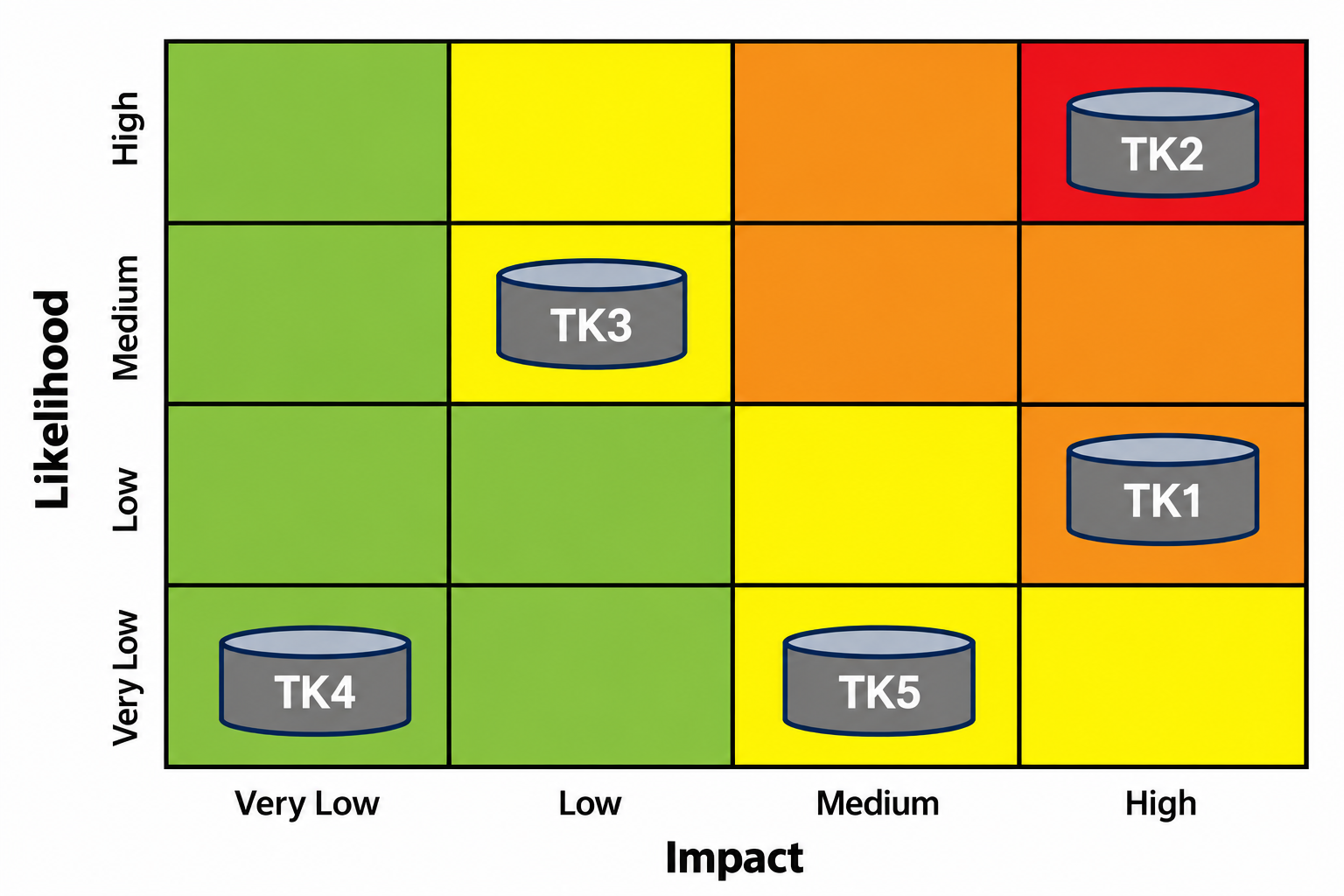
Figure 1: Generic risk matrix showing relative risk-ranked tanks as example of an RBM outcome
Using risk-based approaches to optimize inspection strategies
One of the greatest benefits of a tank integrity RBM program is the ability to incorporate risk into condition-based inspection planning. Instead of applying the same inspection intensity across the entire tank population, organizations can tailor inspection activities to specific risk drivers.
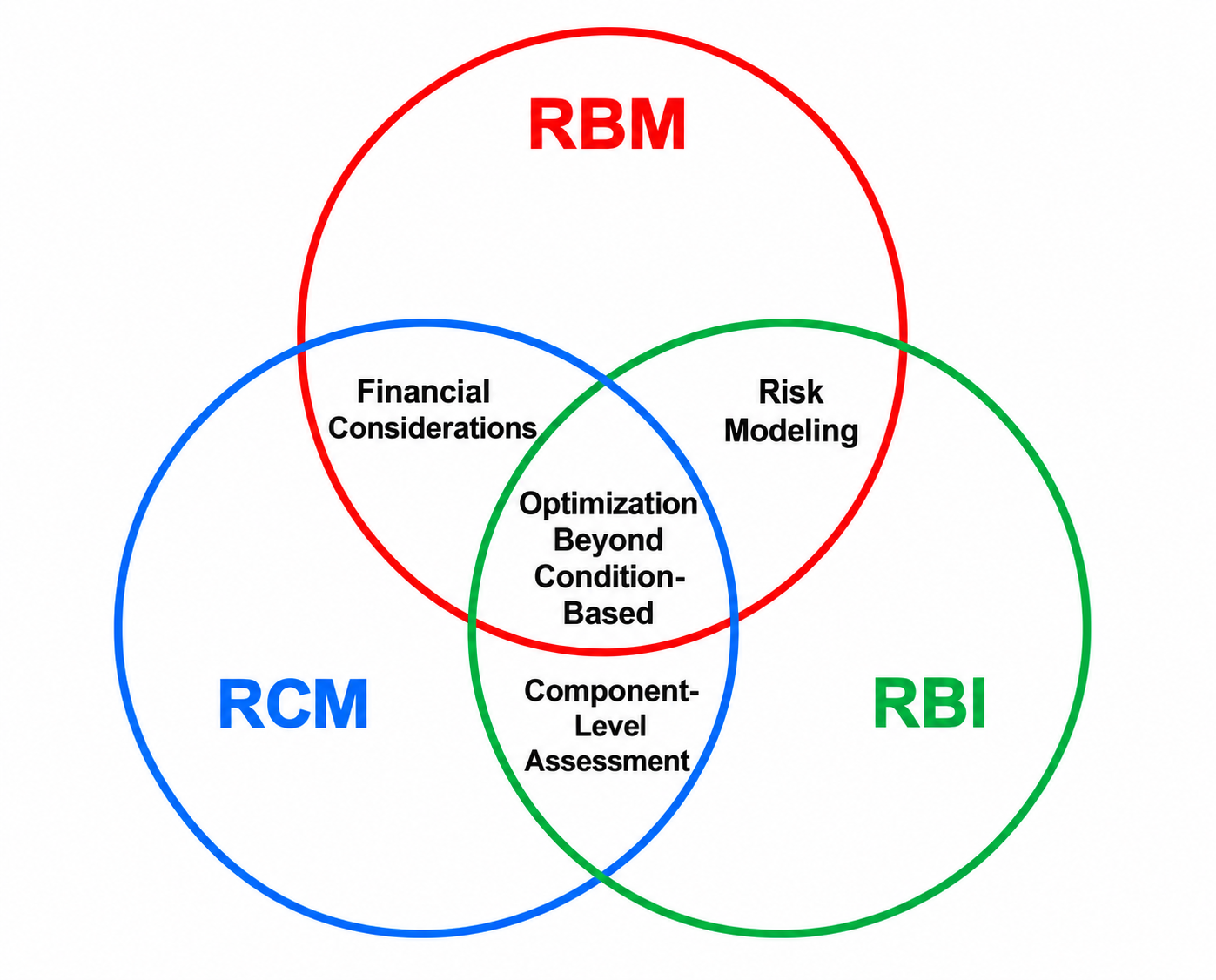
Figure 2: Areas where the RBM, RCM and RBI approaches intersect
Examples include:
- Increasing bottom inspections for tanks with elevated corrosion risk
- Deploying advanced NDE techniques where degradation uncertainty exists
- Utilizing online monitoring technologies to supplement traditional inspections
- Extending inspection intervals for tanks with demonstrated low-risk performance
- Prioritizing maintenance funding toward assets with the highest risk reduction potential
The objective is to focus inspection efforts where they provide the greatest value in managing risk. When implemented correctly, RBI enables organizations to maintain or improve safety performance while achieving more efficient use of inspection resources.
Beyond inspection: Risk mitigation and asset strategy
An effective RBI program extends beyond inspection scheduling. The insights generated by risk assessments support broader integrity management decisions, including:
- Repair planning. Understanding risk drivers allows operators to prioritize repairs that deliver the greatest reduction in overall risk.
- Capital investment decisions. Risk data can support decisions regarding tank replacement, tank retirement, coating upgrades or foundation improvements.
- Corrosion control programs. High-risk corrosion mechanisms may justify investments in coating systems, cathodic protection improvements, enhanced water draw programs or process modifications.
- Long-term asset management. RBI provides a quantitative framework for evaluating asset conditions and remaining service life, which supports strategic planning across the tank fleet.
Common challenges in implementing tank integrity risk-based programs
Although the benefits are significant, implementation requires thoughtful planning. The most common challenges include:
- Data quality. Risk assessments are only as reliable as the underlying data. Incomplete inspection records, inconsistent corrosion measurements and limited historical information can increase uncertainty.
- Organizational alignment. Successful RBI programs require collaboration among operations, inspection, reliability, engineering, maintenance and management teams.
- Managing uncertainty. All risk assessments contain inherent uncertainty. Engineering judgment remains essential when interpreting results and establishing inspection strategies.
- Sustaining the program. Risk models should be continuously updated as new inspection findings, repairs, operational changes and degradation data become available.
A tank integrity risk-based program should be viewed and maintained as a living process rather than a one-time study.
Integrating risk management with regulatory compliance
Tank RBM and RCM can incorporate applicable standards and regulatory requirements within a broader integrity management framework. Depending on the application, this may include Special Emphasis Programs, Inspection and Test Plans, Risk-Based Inspection, Similar Service and Equipment Reliability Plans.
A proactive approach to risk reduction and defect elimination generates data that can help operators justify proposed adjustments to inspection or maintenance requirements, subject to applicable regulatory approval.
The future of tank integrity management
Advances in digital technologies continue to enhance tank integrity programs. Many organizations are integrating risk-based programs with:
- Digital inspection databases
- Corrosion monitoring systems
- Drone inspections
- Robotics
- Advanced analytics
- Predictive risk models
These technologies offer opportunities to improve risk visibility while reducing uncertainty and enhancing decision-making. As integrity management programs mature, integrating risk assessment with asset data will become increasingly important. Digital tools can help operators use that information to inform decisions.
Putting the approach into practice
A practical implementation can begin with a first-pass tank RBM assessment based on API RP 1188 Hazardous Liquid Pipeline Facilities Integrity Management to establish relative risk across the tank fleet. A second-pass RCM assessment can then focus on identifying bad actors and eliminating recurring defects.
These findings can guide specific assessments and the selection of mitigation measures. Depending on the tank’s needs, operators may develop Inspection and Test Plans or conduct RBI assessments. Similar Service evaluations may also be appropriate.
The program should follow a continuous, documented Plan-Do-Check-Adjust process, with findings used to evaluate the effectiveness of actions and refine the approach over time. Proactively sharing lessons learned with regulators can also inform discussions about inspection and maintenance practices.
Where the assessment demonstrates low risk and indicates that a prescribed requirement may provide limited additional value, the resulting data can help justify a proposed deviation, subject to applicable regulatory approval.
Conclusion
Storage tanks remain essential assets throughout the energy and process industries, but not all tanks present the same level of risk. A tank integrity risk-based program allows organizations to move beyond purely compliance-driven inspection planning and adopt a more strategic, risk-informed approach.
Understanding damage mechanisms and evaluating the likelihood and consequences of failure helps operators prioritize resources accordingly. This approach can improve safety, protect the environment, enhance reliability and make more effective use of inspection and maintenance budgets. The ultimate goal of tank RBM is straightforward: focus attention where risk is greatest and reduce uncertainty so that critical storage assets continue to operate safely and reliably throughout their service life.
Becht can help your team evaluate tank integrity risks and develop inspection and maintenance strategies aligned with your assets. Contact us to discuss your tank integrity program and opportunities to strengthen risk management.
Like what you just read? Join our email list for more expert insights and industry updates.