The Most Common Causes of Unexpected Corrosion in Crude Unit Overhead Systems
Preventing unexpected crude unit overhead corrosion requires effective contaminant control and consistent monitoring of operating conditions. Understanding how changes in crude quality affect corrosion potential helps refiners identify developing problems and take corrective action before equipment damage occurs.
Key takeaways
- Unexpected crude unit overhead corrosion often results from changes in desalter performance or contaminants entering the unit.
- Poor desalting can increase chloride levels and create conditions that accelerate overhead corrosion.
- Tramp amines can form corrosive chloride salts that contribute to fouling and equipment damage.
- Elevated ammonia concentrations increase the potential for ammonium chloride salting in overhead systems.
- Effective monitoring helps refiners detect changing corrosion conditions before significant equipment damage occurs.
Unexpected corrosion in crude unit overhead systems can often be traced to changes in desalter performance or the contaminants entering the unit. Effective corrosion control starts with good desalting and requires close attention to overhead treatment and operating conditions. Without good desalting, chloride levels can increase, contributing to low pH and greater amine and ammonia salting potential.
A well-designed monitoring program helps refiners recognize changes early and address their causes before equipment damage occurs.
Crude slate changes and desalter upsets
In many cases, desalter upsets can be traced back to issues with crude quality or incompatibility. Crude quality issues can manifest themselves in many ways, such as oil field additives that create stable emulsions in the desalter, resulting in oil undercarry or water carryover. Free water leaving the desalter will contain the same concentration of contaminants as brine leaving the desalter. Although this may seem a small contribution, it adds up and will increase both the hydrogen chloride (HCl) levels and the potential for amine/ammonia chloride salting. This can lead to higher corrosion rates in components made from typical metallurgical components such as carbon steel.
Crude blending can also result in incompatibility, causing asphaltenes to destabilize and precipitate in the desalter. This can cause stable emulsions and higher water carryover, increasing chloride (Cl) levels. Without proper monitoring in place, this may go unnoticed until the pH drops below 5 or chloride salts form in the overhead or top section of the tower.
An unexpected increase in crude salt may increase chloride levels if the desalter is not reoptimized. Adjustments may be needed to the wash water rate or mix valve differential pressure (dP), along with the chemical additive program and other operating parameters.
Desalter performance and chloride control
As mentioned earlier, the key to good corrosion control is optimizing desalter operation to minimize the salt leaving the desalter. It is imperative to have a robust monitoring program for assessing desalter performance. Salt should be measured as accurately as possible, using a method such as X-ray, halide titration or ICP, and should be treated as a key control index (KCI) along with water removal. The true key performance indicator (KPI) is overhead corrosion and unit fouling due to solids. Remember: dehydration performance cannot exceed desalination performance. The higher the amount of water carryover, the more Cl will reach the downstream equipment.
Routine trending of performance parameters such as salt out, water out and crude tower overhead chlorides can identify changes and head off unexpected issues due to a loss of desalting performance.
Caustic injection and overhead chloride control
The next best control for overhead chlorides is the proper injection of fresh caustic into the desalted crude. When used, fresh caustic can mitigate some shortfalls in desalting efficiency. But monitoring caustic strength and dosage rate helps minimize excess caustic. Typical caustic injection is 0.5-1.5 pounds of sodium hydroxide (NaOH) per thousand barrels (PTB).
Problems can arise if spent caustic is used without monitoring its active caustic content. This can cause greater fluctuations in the chloride levels reaching the crude tower overhead. Other contaminants, such as phenols, may also be introduced.
Overhead pH control
Most refiners maintain overhead circuit pH within a range of 5.5-6.5, although some operate within a broader range of 5.5-8. The optimal target depends on the unit’s operating conditions. Readings routinely above 7.5 may indicate the presence of tramp amines. Most use manual methods to measure pH, preferably with a pH meter. Online pH systems have also been successfully deployed.
Continuous online pH probes can be considered an industry-recommended practice. These systems require careful design to minimize probe fouling and improve reliability. Close-loop control of neutralizer injection is the best approach.
Tramp amines and chloride salt formation
One of the main challenges in controlling overhead circuit corrosion is the presence of tramp amines. These amines enter with the crude slate, typically from hydrogen sulfide (H2S) scavengers used in oilfield production and transportation. Other sources include amine units in the refinery and steam treatment. Tramp amines form salts with chlorides and other halides that can cause corrosion, fouling and underdeposit corrosion under specific conditions. It is imperative to monitor salting potential and identify areas where salting can form. These locations warrant additional inspection. Controlling salting issues involves water washing and chemical additives, along with minimizing the amines and chloride precursors.
Removing tramp amines is best handled in one of two ways: either with a desalter acidification program using an organic acid in the desalter wash water, or by restricting H2S scavenger use to products not based on a monoethanolamine triazine. Desalter acidification involves a simple acid-base reaction. The wash water needs to be reduced to a pH of around 3 and the desalter water effluent controlled to a pH of 5.0-5.5. It is important that the crude tower overhead pH and neutralizer consumption be monitored closely, as some acids used can increase the corrosivity due to carryover from the desalter or solubility in crude oil.
Besides measuring tramp amines in the crude or tower overhead condensate, a tell-tale sign of their presence is an increase in desalter brine pH of 1-2 units. Another is an overhead condensate pH above 7, even if neutralizer demand falls to zero. The ramifications of this are:
- Increased amine salting in the overhead system and top tower, from the diesel section upward. The predominant tramp amine is monoethanolamine (MEA). MEA-Cl salts can cause corrosion rates of 150-250 mils per year (mpy) on carbon steel.
- Tramp amines introduced with a crude shipment or feedstock can disappear just as quickly. If the neutralizing amine is turned off to compensate for the elevated pH, the pH can drop rapidly to 1-3 and not be detected without an online pH probe. This could lead to corrosion rates as high as 3000-4000 mpy on carbon steel.
High ammonia concentration and ammonium chloride salting
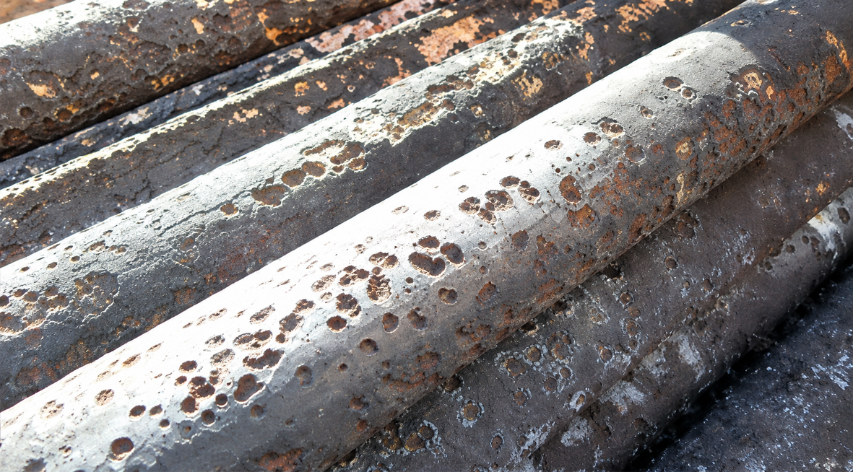
One issue that can impact crude tower overhead corrosion and fouling is elevated ammonia (NH3), which can increase the ammonium chloride (NH4Cl) salting potential. NH4Cl salt corrosivity on carbon steel can be in the 400-600 mpy range. Salt-related corrosion can also increase between the tower and the top PA, as well as in the overhead system. Fouling and under-deposit corrosion can occur when system temperatures allow NH4Cl salts to absorb water. Wet salts are very corrosive. The source of elevated NH3 is typically stripped sour water containing greater than 30 ppm NH3 or cracked stocks reprocessed in the crude unit. It may also be inherent in the crude being processed.
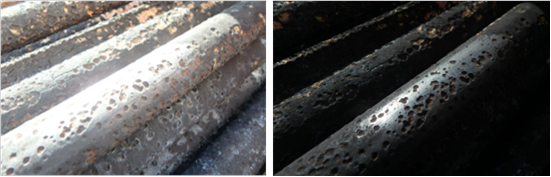
Figure 1: NH4Cl fouling and corrosion from shock condensation
Removing NH3 is best handled in one of three ways:
- A desalter acidification program using an organic acid in the wash water
- Improving the quality of stripped sour water, if it is being used
- Removing desalter water sources with high NH3 concentrations
The efficiency of NH3 extraction can be monitored using wet chemistry methods, such as Chemetric, or HACH water testing methods. These tests are quick and can be performed routinely without sophisticated laboratory procedures or equipment.
Chemical additive selection and injection
Most crude unit overheads are treated with an organic neutralizer and a filming corrosion inhibitor (CI). However, many sites are not applying chemical additives in accordance with industry standards.
Organic neutralizers are best applied using a steam diluent through a spray nozzle. This method allows the neutralizer to be injected as a fog into the overhead vapor stream, maximizing mixing. Injecting undiluted neutralizer can result in corrosion just downstream of the injection point. Injecting neutralizer only into the wash water system may leave inadequately washed areas exposed to low-pH condensing water. This is a particular concern when overhead piping is asymmetric or there is only one injection point in a system with multiple finfans.
Neutralizer selection must match the overhead operating conditions. Selecting the wrong neutralizer can actually promote fouling and corrosion.
Most filming corrosion inhibitors used as part of a comprehensive corrosion control program are heavy, high-boiling hydrocarbons that are not volatile. They are considered corrosive, so diluting them with a solvent, such as reflux naphtha, and spraying them into the overhead line is preferred. If a water-based filming amine CI is used, injection into the overhead water wash would be appropriate.
The Association for Materials Protection and Performance (AMPP) TR34109 Crude Distillation Unit—Distillation Tower Overhead System Corrosion report provides guidelines for chemical injection methods and sequencing.
Chemical and waterwash injection failures
Failure of either the chemical corrosion control or water wash facilities can result in erosion corrosion in addition to all the other mechanisms discussed. An injection failure can be suspected if monitoring indicates a performance decline despite nothing changing the typical parameters. Radiography (X-ray), thermographic techniques, retractable injection quills or removal of the quills at every turnaround may be required to identify this issue.
Monitoring crude unit corrosion and fouling
The KPIs in a crude unit ultimately reflect reductions in corrosion and fouling rates. KCIs are the factors that directly influence those KPIs. Examples include:
- Desalter salt out
- Desalter water out
- Corrosion rate (<5 mpy)
- Preflash and crude tower overhead pH
- Relative salting potential
Trending these measurements alongside unit operating data can indicate active corrosion.
Preventing unexpected crude unit overhead corrosion
Any number of factors can result in unexpected corrosion failures in crude tower overheads. The key is to have a robust monitoring program designed to identify changes in the main parameters and a well-defined process to address deviations when they occur.
Becht can help evaluate the causes of unexpected crude unit overhead corrosion and identify improvements to your corrosion control program. Contact our team to discuss your unit’s operating conditions and monitoring practices.
Like what you just read? Join our email list for more expert insights and industry updates.