Fired Heaters at a Crossroads: Why the Industry Needs Stronger Operator Training
By Belal Hassoun and Grant Jacobson
Fired heater incidents are increasing as aging equipment operates under tighter margins and experienced personnel retire. Structured operator training improves combustion awareness and reduces the likelihood that small issues escalate into major events.
Key takeaways
- Fired heater-related incidents are increasing as equipment ages and operating demands rise.
- Many serious events begin with subtle combustion changes that go unrecognized.
- Structured training strengthens operator judgment during abnormal conditions.
- Effective fired heaters training connects combustion fundamentals to real unit conditions and site-specific practices.
Fired heaters sit at the center of refinery and petrochemical operations, providing the heat that keeps major process units running. When they operate smoothly, they rarely draw attention – but when something goes wrong, the impact can escalate quickly.
Over the past year, many operators and technical leaders have sensed a shift. There has been a noticeable rise in heater-related incidents and near misses across the industry. Some events make headlines while others fly under the radar, but the common thread is that more heaters are failing in ways that lead to explosions and equipment damage, often followed by extended downtime.
Several pressures are shaping this higher-risk environment:
- Fired heaters are aging
- Throughput expectations continue to increase
- Experienced personnel are retiring
- Unit complexity has grown
Taken together, these factors make focused fired heater training a priority that shouldn’t be pushed aside when budgets tighten.
Why knowledge gaps are becoming more visible
Many fired heaters in facilities across the world have been in service for decades. They were built for specific feed conditions and firing rates that don’t always match how they’re being run today. As plants push throughput higher, the operating window becomes tighter. In some facilities, monitoring systems haven’t kept up with this squeeze, so operators rely heavily on what they see and hear in the field as well as strong safety and procedural cultures.
That pressure is showing up in the equipment itself. Burners are increasingly fouling due to variations in refinery fuel gas composition. Operating challenges with air registers – including seized or broken registers and misalignment – are also becoming more common, leading to poor performance. At the same time, instrumentation such as O₂ analyzers and draft transmitters can lose calibration and accuracy, making small shifts in combustion behavior harder to spot. These changes don’t always trigger concerns right away, but they do alter how the heater responds. In some cases, teams only recognize the shift after performance begins to move off target or a near miss forces a closer look.
Meanwhile, the workforce is changing quickly. A wave of retirements over the past several years has reduced the number of experienced fired equipment specialists at many sites. In these cases, people who understood how a heater “normally” behaved or how to “thread the needle” are no longer there. Procedures help, but they can’t fully replace judgment built through years of hands-on troubleshooting, start-ups, and shutdowns.
When aging equipment and accelerated retirements happen together, knowledge gaps become harder to ignore. Structured training gives teams a practical way to rebuild shared understanding and reinforce how operating decisions affect heater response.
What does a fired heater incident look like?
The term fired heater incident can cover a wide range of outcomes, from warning signs to events with lasting consequences. For example, an operator may open an observation door while the heater is running at positive pressure and receive a burst of hot flue gas, a signal that draft is in an unsafe operating window (i.e., positive).
Other incidents develop inside the firebox. Delayed ignition can occur when fuel accumulates before lighting, and in a large process heater, that ignition can damage refractory and tubes – as well as trigger immediate safety hazards for nearby personnel. Tube leaks introduce another layer of risk. If conditions continue unchecked, what begins as a manageable issue can escalate into a deflagration or fire, resulting in fatalities and millions of dollars in repairs and lost production.
What ties these scenarios together is how they begin. They rarely start with a dramatic failure. More often, they grow out of small decisions made under pressure or subtle signals that go unrecognized. Consider a recent case where operators responded to a high tube skin temperature alarm by pinching a burner valve near that tube skin. The alarm cleared, which suggested the issue had been addressed. Fuel then redistributed to adjacent burners and increased firing elsewhere, where the temperature could not be “seen.” Over time, tubes outside the monitored location overheated, contributing to a serious event.
Situations like this reinforce the importance of cause-and-effect understanding. Structured fired heater training plays a critical role here, strengthening the judgment that helps operators interpret those signals and respond with confidence when conditions begin to drift.
What effective fired heaters training should deliver
Effective fired heaters training has to start with practical understanding. Operators need to grasp how combustion fundamentals connect to what they’re actually seeing in the field, and how the adjustments they make influence what’s happening inside the firebox.
On a daily basis, training should help participants:
- Understand combustion behavior in language that makes sense on shift
- Read draft and excess oxygen in the context of how the heater is performing
- Recognize how burner adjustments affect tube metal temperature
- Respond with intention during start-up or abnormal conditions
- Connect what the instrumentation shows to what’s physically happening inside the heater
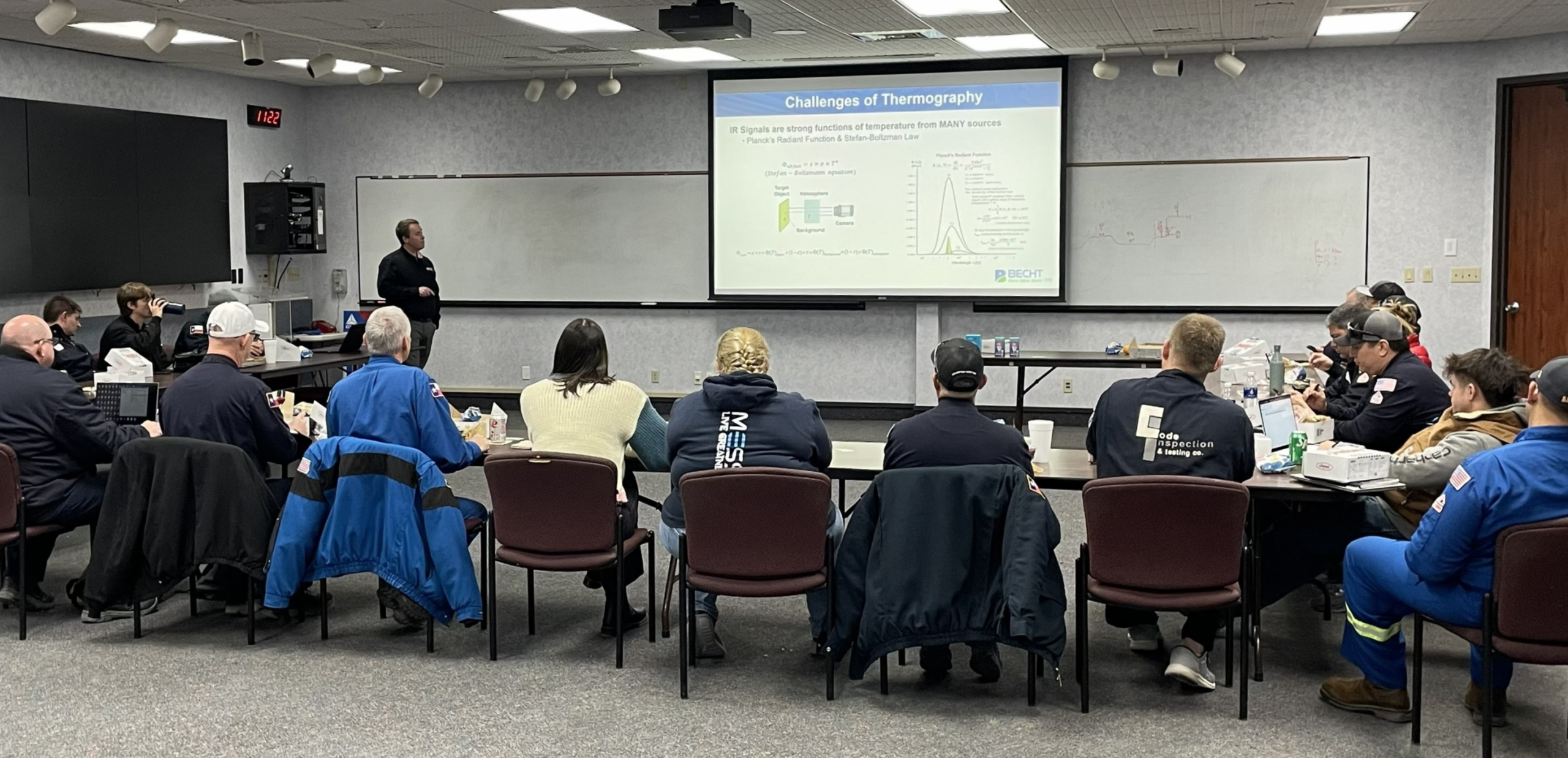
That foundation is important – but the way it’s delivered determines whether it actually changes behavior. Becht’s On-Site Fired Heaters Training Program begins before the class starts. Instructors spend time walking the units and speaking directly with the people responsible for them. That preparation shapes the course around how the heaters are actually operated, including current practices and known challenges. When participants see their own unit on the screen, the discussion immediately feels relevant.
The program is technology-agnostic, with no vendor or design bias. The focus remains on combustion performance and operating judgment using existing equipment, so participants leave with principles they can apply regardless of burner manufacturer, control system, or design.
The material can also be tailored to the people in the room: the depth of discussion adjusts to the audience, while the core principles remain the same. Sessions can be structured for:
- Operations teams who work the units daily
- Engineering groups responsible for system performance
- Inspection personnel focused on equipment condition
- Maintenance personnel who must ensure equipment issues are addressed
The instructors bring firsthand operating experience. They’ve worked with fired heaters in plant environments and supported sites during inspection, investigations, test runs, troubleshooting activities, and more. That background guides how scenarios are discussed and keeps the focus on practical cause-and-effect relationships.
In the classroom, the session runs as an interactive working discussion. Participants describe operating situations they’ve encountered, and instructors use those examples to explore how combustion behavior and heater response are connected. The conversation stays anchored in real operating conditions, which helps the material stay with people long after the class ends.
A proactive approach to risk reduction
Fired heaters respond quickly to small changes, and operators rarely have much time to decide. The line between a controlled adjustment and an escalating event often depends on how clearly the team understands what the heater is signaling. Structured training preserves practical knowledge and supports confident decision-making, especially during a high-risk event such as fuel flooding.
Becht’s On-Site Fired Heaters Training Program reflects the realities of daily operation, site culture, and facility-specific equipment. To learn more or discuss how this custom training could support your team, contact us today or visit our website.
Like what you just read? Join our email list for more expert insights and industry updates.