Terminal Mechanical Integrity: From Compliance to Risk-Based
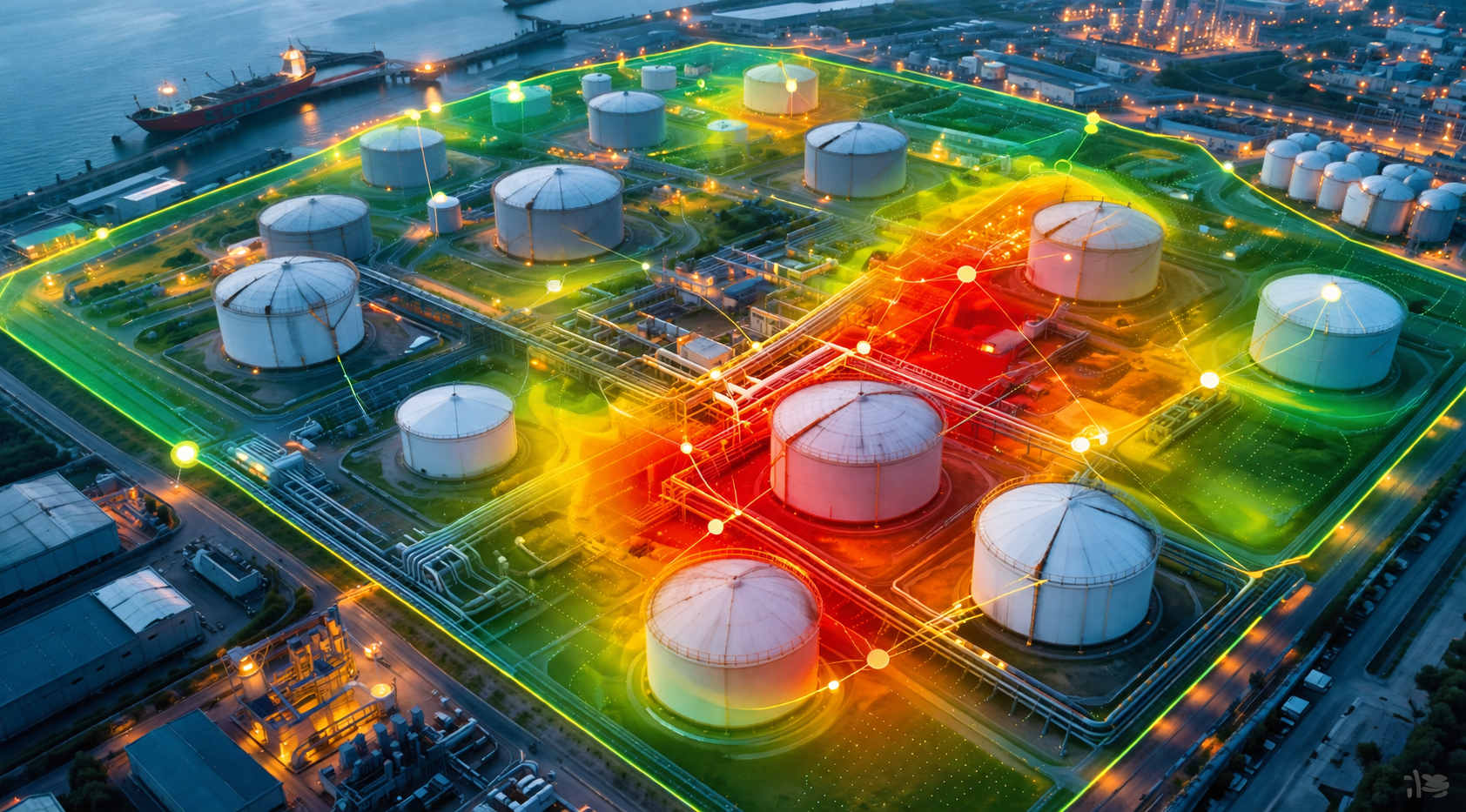
Terminal operators are shifting from compliance-based mechanical integrity programs to risk-based approaches that prioritize assets based on failure likelihood and consequence. This shift improves inspection effectiveness and better reflects the true risk profile of facility operations.
Key takeaways
- Many incidents occur within terminal facilities rather than along pipeline segments.
- Compliance-based programs may not reflect actual risk across complex facility assets.
- Risk-based mechanical integrity prioritizes inspection based on likelihood and consequence of failure.
- API RP 1188 provides a structured framework for facility integrity management.
- Effective programs require integration across operations, engineering, and integrity teams.
What industry data is telling us
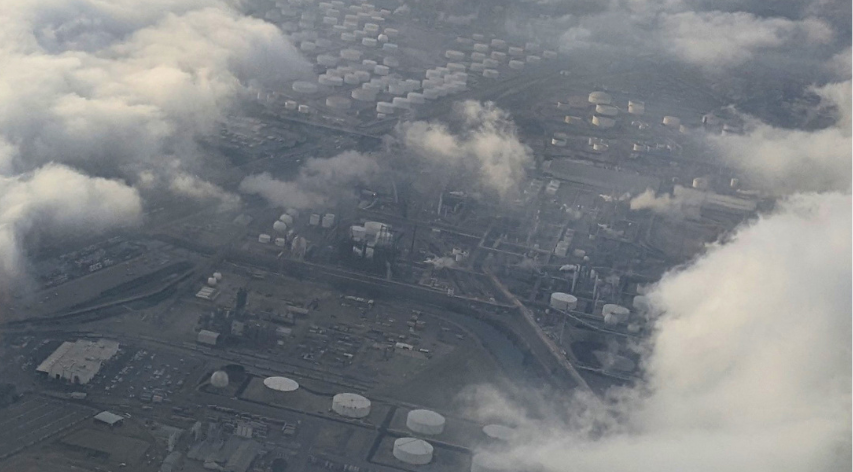
The 2024 API-LEPA Performance Report, covering data from 2020-2024, reveals an important trend: 78% of onshore incidents from liquids pipelines were contained within operator property, including pump stations, tank farms, and terminals. Equipment failure remains the most frequent cause, with corrosion another significant contributor.
This concentration of incidents within facilities highlights a critical reality: many integrity programs were originally designed around regulatory requirements for pipeline segments under 49 CFR Part 195. Facilities, especially non-regulated assets, often received less structured risk evaluation.
When most incidents occur inside the fence line, integrity management must extend beyond compliance boundaries. Operators are responding by integrating regulated and non-regulated assets into unified, risk-ranked programs.
Why compliance-based MI is no longer enough
A compliance-driven mechanical integrity (MI) program typically centers around required inspection intervals and documentation, with activities shaped primarily by prescriptive regulatory mandates. That approach can maintain baseline conformance, yet it may not reflect the true risk profile of a complex terminal.
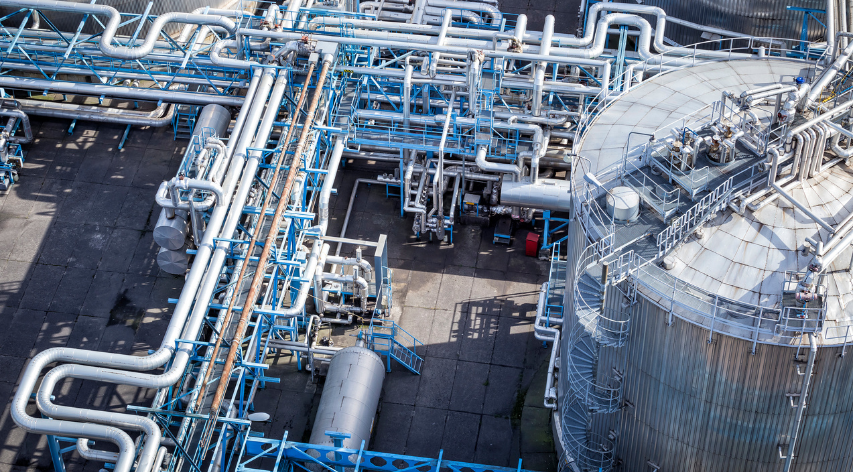
Terminals often contain:
- Aboveground piping systems built to varying historical codes
- Buried transfer lines with limited historical inspection data
- Aging tank foundations and appurtenances
- Interfaces between pipeline and facility equipment
- Legacy modifications that were never integrated into a centralized risk model
When these assets are managed in isolation, inspection frequency may be determined by code minimums rather than probability and consequence modeling. Resources can be distributed evenly instead of being concentrated where risk is highest.
Risk-based MI seeks to correct this imbalance. It prioritizes assets according to credible failure mechanisms and evaluates how a release would affect safety and operations. It also connects inspection planning to enterprise-level risk visibility.
The role of API RP 1188 in facility integrity
API RP 1188 provides a structured framework for applying risk-based concepts to hazardous liquid pipeline facilities. It updates and replaces concepts formerly addressed by API RP 2611 and bridges facility integrity with pipeline risk methodologies.
The recommended practice encourages operators to:
- Identify credible threats at facilities
- Assess likelihood using consistent evaluation methods
- Evaluate consequences, beginning with safety and extending to environmental exposure and business continuity risk
- Rank risk to guide inspection and mitigation planning
This approach mirrors the risk framework in API RP 1160 and reinforces the management system principles in API RP 1173.
By aligning facility and pipeline risk models, operators gain comparability across asset types. A buried transfer line can be evaluated using structured external corrosion direct assessment under AMPP SP0502. Internal corrosion threats can be analyzed under AMPP SP0208 or related standard, while aboveground piping inspection plans can be developed under API 570 with guidance from API 574 and API 571. Risk-Based Inspection (RBI) methodologies from API 580 and API 581 can be integrated for probability and consequence calculations. The result is a cohesive program rather than parallel systems.
Common benchmark approaches in terminal risk management
Operators advancing their terminal mechanical integrity programs are adopting several consistent practices.
High-level risk screening across the facility
Many companies begin with a screening-level risk assessment that spans tanks, piping, pump systems, and appurtenances. This process often extends the Facility Risk Assessments PHMSA Part 195 risk-based framework to assets outside formal regulatory scope. The goal is to establish relative risk rankings and identify areas where deeper evaluation is warranted.
Structured risk evaluation under API RP 1188
Following initial screening, operators apply structured risk evaluation methods and document threat identification. Consequence modeling incorporates product properties, credible release volumes, potential migration pathways, and the presence of nearby receptors. Risk rankings then inform inspection intervals and mitigation priorities.
Risk-informed Inspection and Test Plans
Inspection and Test Plans are increasingly tied to quantified or semi-quantified risk outputs. Aboveground piping programs reflect damage mechanisms defined in API 571. Buried piping programs integrate ECDA and internal corrosion assessment. RBI models help justify interval adjustments and focus nondestructive examination where degradation probability is higher.
Plan–Do–Check–Act integration
Terminal MI programs are increasingly embedded within broader management systems, where the Plan–Do–Check–Act cycle emphasized in API RP 1173 supports continuous improvement. As inspection data is collected, risk models are refined and the results are carried forward into future planning decisions.
Where terminal integrity programs often stall
Even with strong frameworks available, implementation often falters at the point of integration. Risk assessments may be completed and archived without shaping daily inspection decisions. Corrosion monitoring data can remain siloed within maintenance systems, limiting its influence on enterprise risk visibility. Over time, inspection intervals may drift back to code minimums when internal risk justification becomes difficult to defend.
Another common gap involves consequence modeling: probability calculations receive attention while business impact and potential operational downtime receive less structured analysis. Prioritization becomes less meaningful when consequence evaluation is underdeveloped,
A mature risk-based MI program requires cross-functional alignment. Operations, engineering, integrity, and compliance teams must share data and agree on risk tolerances. Without this integration, the risk model remains theoretical and disconnected from daily operations.
The business case for proactive terminal integrity
As scrutiny from regulators, insurers, investors, and communities increases, terminal operators must manage aging facilities within constrained capital budgets, knowing that even modest disruptions to uptime can affect margin.
A proactive, risk-based integrity program supports:
- Targeted capital allocation based on risk ranking
- Reduced likelihood of high-consequence failures
- Improved inspection efficiency
- Clear documentation of risk-informed decision-making
When inspection and maintenance plans are tied to structured risk evaluation, operators can justify interval changes with defensible logic and improve visibility into emerging threats before they escalate.
The API-LEPA data reinforces that incidents are concentrated within facilities. Addressing this reality requires extending integrity management beyond minimum regulatory thresholds.
Moving toward an integrated facility integrity strategy
The transition from compliance-driven mechanical integrity to proactive risk-based management reflects a broader change in how terminal risk is evaluated. Facilities are assessed with the same analytical rigor applied to pipeline systems, integrating both regulated and non-regulated assets into a shared risk framework and supporting inspection decisions with structured probability and consequence modeling.
Increasingly, terminal operators should be asking: Does our integrity program accurately reflect the facility’s true risk profile and support informed decision-making?
As API RP 1188 adoption expands alongside alignment with API RP 1160 and API RP 1173 principles, terminal integrity management is taking on a more strategic role. At leading organizations, mechanical integrity is defined by how effectively risk informs action across the facility footprint and shapes operational decisions beyond minimum regulatory expectations.
The transition from compliance-driven mechanical integrity to proactive risk-based management is a journey with several maturity milestones. Assessing the current state against the desired future state – and the appetite for risk reduction against available funding – ae mission-critical steps in evolving toward a proactive, risk-based approach.
Like what you just read? Join our email list for more expert insights and industry updates.