
Transforming Corporate Standards – Part 6: Modernizing Piping Specs from Documents to Centrally Managed Data

Piping specifications are more effectively managed as structured data rather than static documents. Converting them into a centralized database improves consistency, simplifies change management, and enables integration with engineering and operational systems.
Key takeaways
- Piping material specifications are difficult to manage as document-based files due to scale and system integration.
- Converting specs into a centralized database enables consistent component definitions and controlled reuse.
- Global updates can be applied efficiently without manual edits across multiple files.
- Structured data improves quality assurance through queries, reporting, and validation checks.
- Digitized specs support integration with CAD, CMMS, and emerging standards like CFIHOS.
Introduction: Why Piping Specs are difficult to manage at scale
Few topics in a corporate standards collection are as essential, and as frequently frustrating, as Piping Material Specifications (Piping Specs). They serve as critical site records and are used daily for inspection and maintenance activities, but they’re notoriously difficult to manage, use, and maintain at scale.
Similar to the difference between a design specification and an asset data sheet, Piping Specs translate requirements from piping design standards into pre-engineered selections of approved components for defined design conditions: pressure/temperature limits, corrosion allowance, materials strategy, and process service applications.
Once adopted, Piping Specs become part of the facility’s operations. The details and nomenclature get embedded across critical systems such as ERP/CMMS, IDMS, and P&IDs, which is why changes are never “just a document update.” And because of this integration, small inconsistencies quickly become expensive problems.
Challenges with legacy Piping Specs
Table 1 breaks the legacy Piping Spec challenge into the two drivers we see most often – quantity and quality – and what each looks like in the real world.
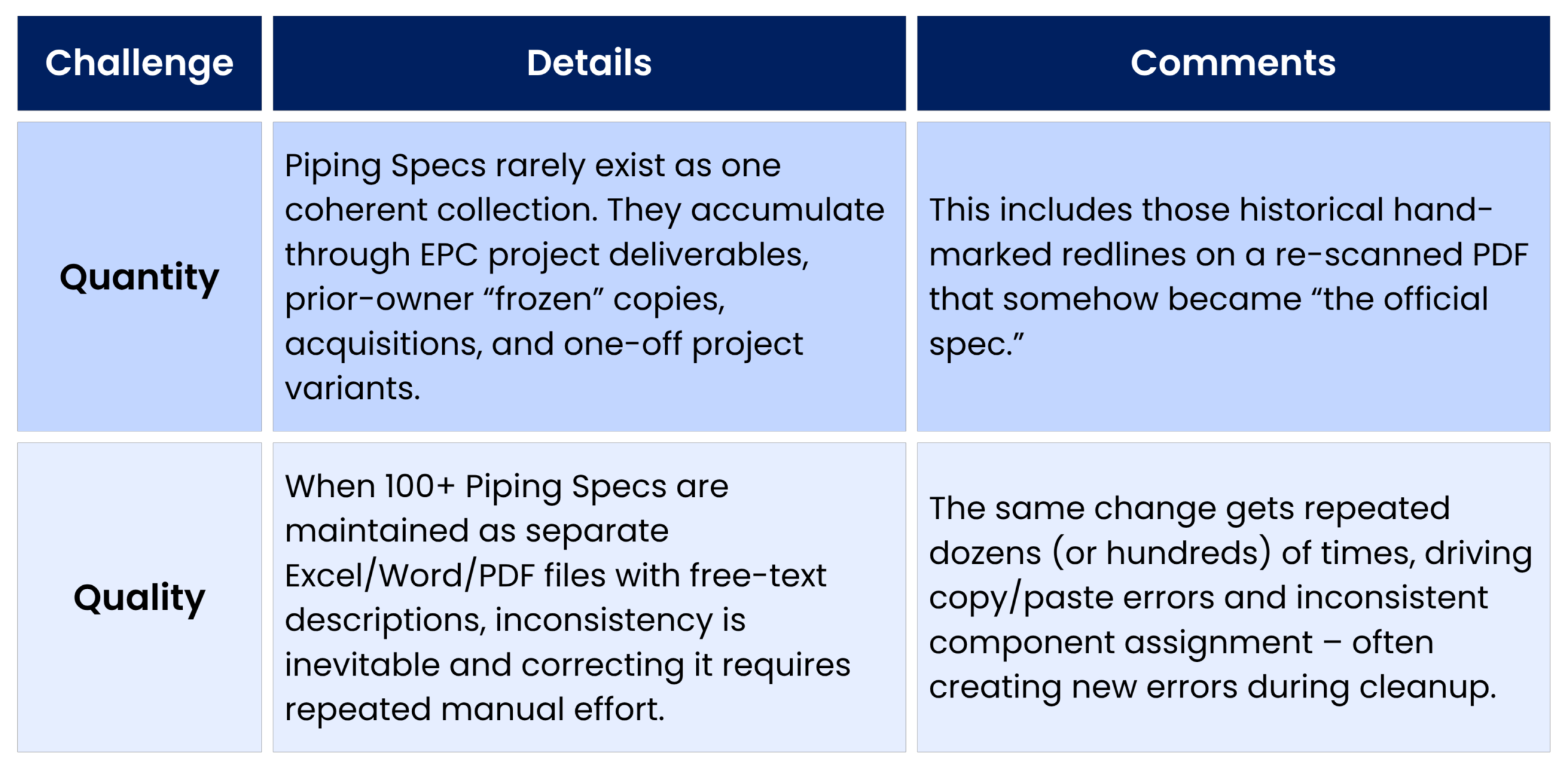
Table 1: Challenges with Legacy Document Management
The solution: Converting Piping Specs into a centrally managed database
The BechtPractices® Piping Material Specification Database (Piping DB) addresses the unique reality of Piping Specs by converting file-based documents into a centrally managed database with governed component and valve catalogs, centrally managed notes, and structured data for improved consistency and integration readiness.
Integrated tools support efficient day-to-day use, while queries and report generation enable stronger quality assurance and clearer insights across the overall Piping Spec collection. And, unlike other systems that force you to adopt new Piping Specs, BechtPractices Piping DB digitizes your collection of existing specs – so you get centralized control without a disruptive reset.
Because the platform is highly configurable, organizations can choose a self-managed approach or a turnkey digital transformation service led by Becht experts. This means you can modernize and sustain your current collection while minimizing impact to the workflows and systems built around it.
For organizations that want to accelerate adoption or are building a new Piping Spec collection, we can expand the turnkey offering to include pre-engineered Piping Specs from The Becht Engineering Specifications & Technical Practices (The BEST Practices®) collection.
Building a governed, reusable data foundation
A Piping DB delivers the most value when the “building blocks” are centrally managed. In practice, that means moving from file-based Piping Specs to centrally governed libraries that can be reused across the entire spec collection – so teams manage the component system once instead of maintaining the same content repeatedly.
These centrally managed libraries typically include service and design requirement frameworks, component and valve catalogs, design and component notes, branch table construction details, structured attributes, and configurable format and styling.
Centralizing content is the foundation for unlocking the full value of a Piping DB. With governed libraries in place, teams can:
- Manage catalogs, notes, branch tables, and attributes in one place
- Create, clone, and query components, valves, and specs
- Apply global modifications efficiently across the system
- Incorporate site-specific preferences through a highly configurable structure
- Generate reports to support quality assurance and provide collection insights
Immediate value: Improving efficiency and change management
Global modifications
In our experience, the most common driver for moving to a Piping DB is improving efficiency in ongoing spec upkeep and change management.
- In the file world, even the smallest inconsistency can become a systemic correction campaign – requiring days, weeks, or sometimes months to open each file, check to see if an error exists, make edit(s), log a revision, and repeat across hundreds of files while relying on manual validation checks.
- In the database world, centrally managed content allows global changes to be applied much more effectively.
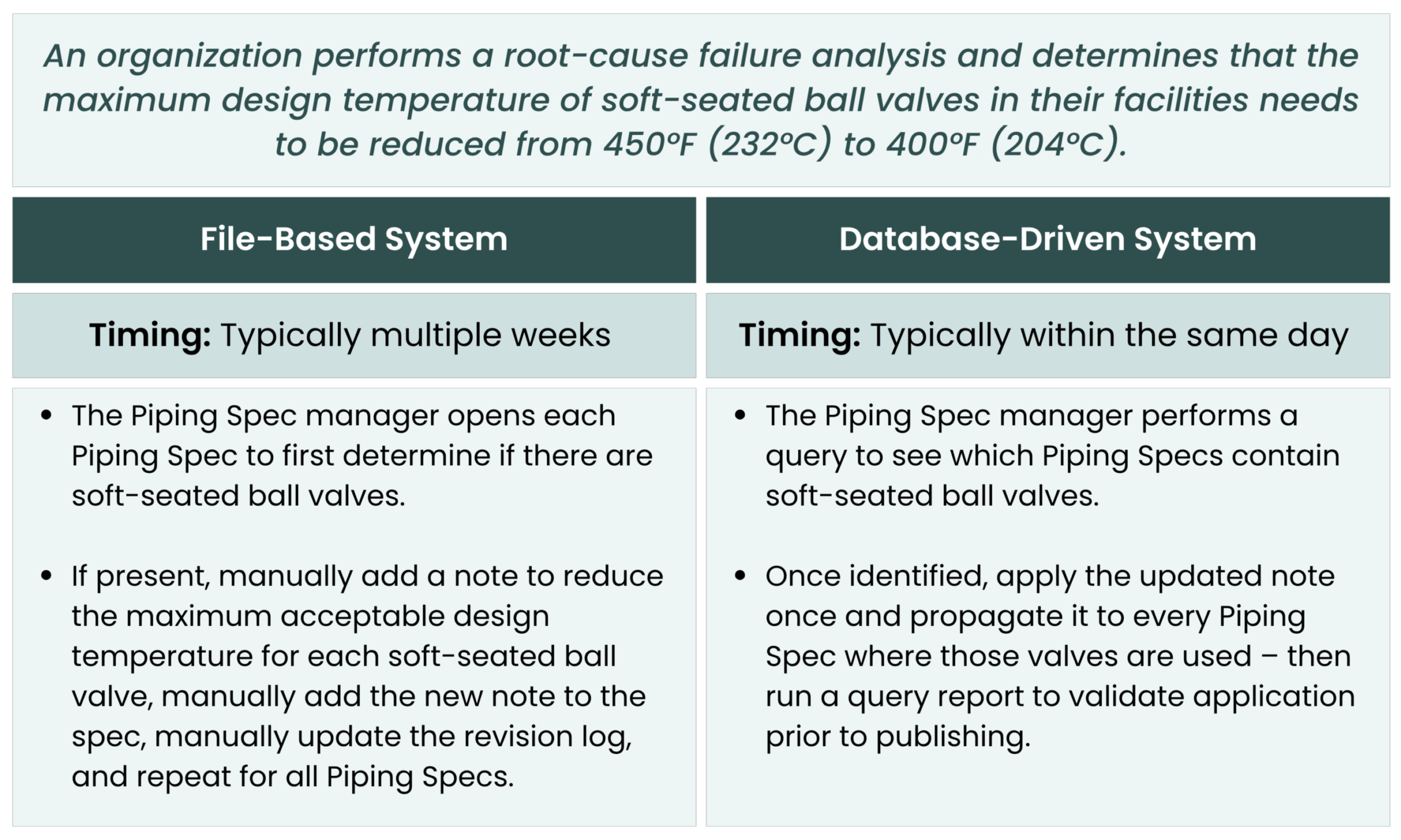
Figure 1: Global Modification Example – File-Based vs. Database System
As we’ll discuss in more detail later, integrated logic can also be added during the database-driven process to store smart logic that supports advanced filtering based on a specific use case.
Data quality improvement
Data quality improvement is usually the other driver for transitioning to a Piping DB. By converting from file management to centralized libraries with structured data, consistency is propagated throughout the collection.
We typically see data quality improved during two primary phases:
- Pre-implementation – during initial structure development
- Post-implementation – utilizing queries and reports to perform quality assurance
Pre-implementation
Prior to Piping DB conversion, organizations need to define “what good looks like.” Once developed, the structured data picklists and data structure format ensure each component adequately, and consistently, defines each component and its necessary details. This gives organizations a chance to reset, define missing or assumed attribute details, and begin gathering data to be incorporated into the system before implementation.
BechtPractices Piping DB is highly configurable and can either recommend formats, nomenclatures, and required data based on industry experience or be configured to align with an organization’s unique needs and preferences.
Post-implementation
Once implemented, the system is designed to run queries and generate reports that show where specific components are used and identify components based on selected structured data.
The BechtPractices Piping DB has this functionality integrated into the system as an advanced, easy-to-use tool. These component and valve query tools enable meaningful QA reporting and consistency checks, like:
- Identifying components missing a required note
- Noting inconsistent application of an attribute
- Validating that a global change landed everywhere it should
- Catching copy/paste inconsistencies before they become a CAD, procurement, or field issue
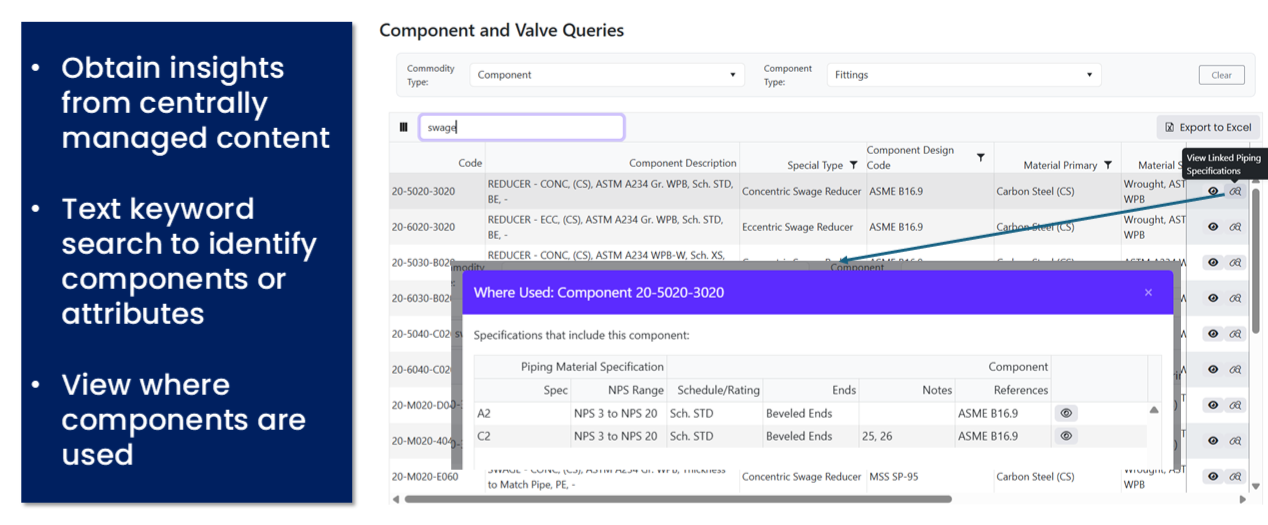
Figure 2: Query and Gain Insights for Components and Valves
After quality assurance checks are performed, users can utilize the database functionality to more efficiently implement the global changes to ensure consistency and alignment.
Advanced functionality: Enhancing how users interact with Piping Specs
Once Piping Specs are digitally transformed and centrally managed, organizations can deliver the modern standards experience we’ve been building toward in this series with a Requirements Database Management System (RDMS) – applied specifically to Piping Specs.
Dynamic spec viewing
Dynamic spec viewing lets users expand and collapse sections, and sort content by component attribute order, so they can focus on what’s relevant to the task at hand.
It may sound simple, but it solves a real problem: Piping Specs are often consumed under time pressure, and traditional “everything-all-at-once” formats bury the signal in noise. With a dynamic, data-driven spec, users can quickly find the specific requirements and component options they need without scrolling through pages of unrelated content.
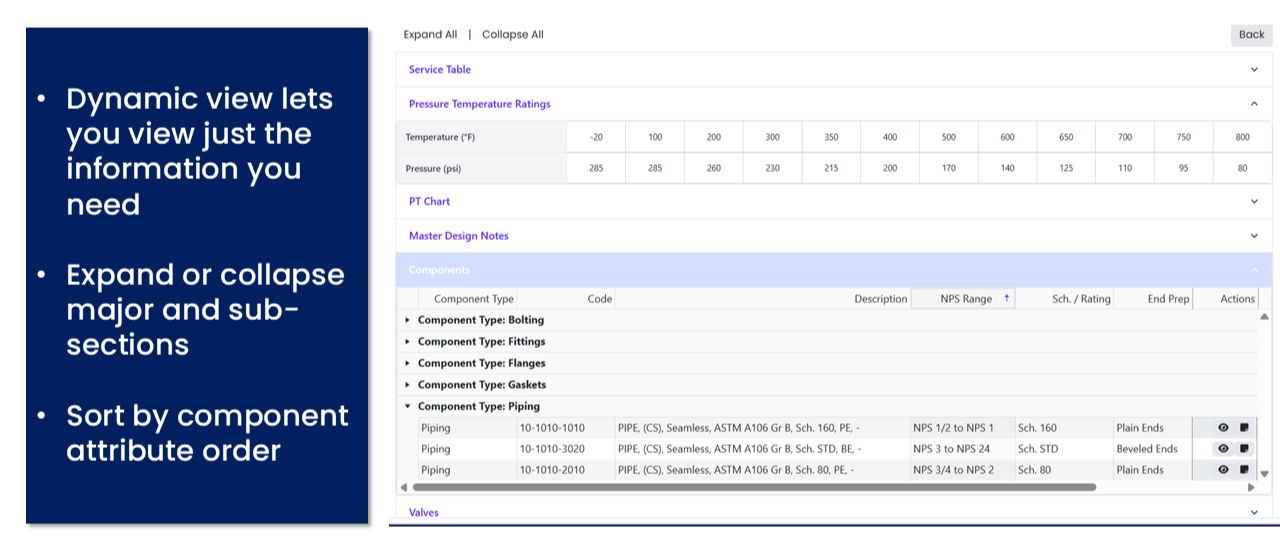
Figure 3: Dynamic Spec Viewing
Advanced filtering
In a file-based world, providing alternatives usually meant one of three things: list every acceptable option (and overwhelm the user), bury applicability in confusing notes, or rely on legacy corporate knowledge to “know what’s allowed.”
Now, in a structured database with integrated logic, we can use advanced filtering with pre-set toggled views that can display, hide, and sort component and valve lists based on guidance such as primary, secondary, or acceptable-but-least-preferred.
Filtering also supports practical design-condition logic. For example, if a Piping Spec’s overall limits are higher than certain component limits, the system can automatically filter out options that don’t meet the project’s design conditions (think soft-seated ball valves).
That’s how specs become decision-support tools:
- Default to preferred – for speed and consistency
- Expand to alternates – when constraints demand it
- Keep governance explicit – making it easier to audit
- Apply logic-based filtering – based on project-specific design criteria
Detailed component view
Components in a Piping DB can display variable amounts of identified information based on the use case. Typical examples include:
- Short description – for in-line Piping Spec component identification
- Catalog description – for detailed component and valve library details
- Detailed attribute description – for all component and valve details
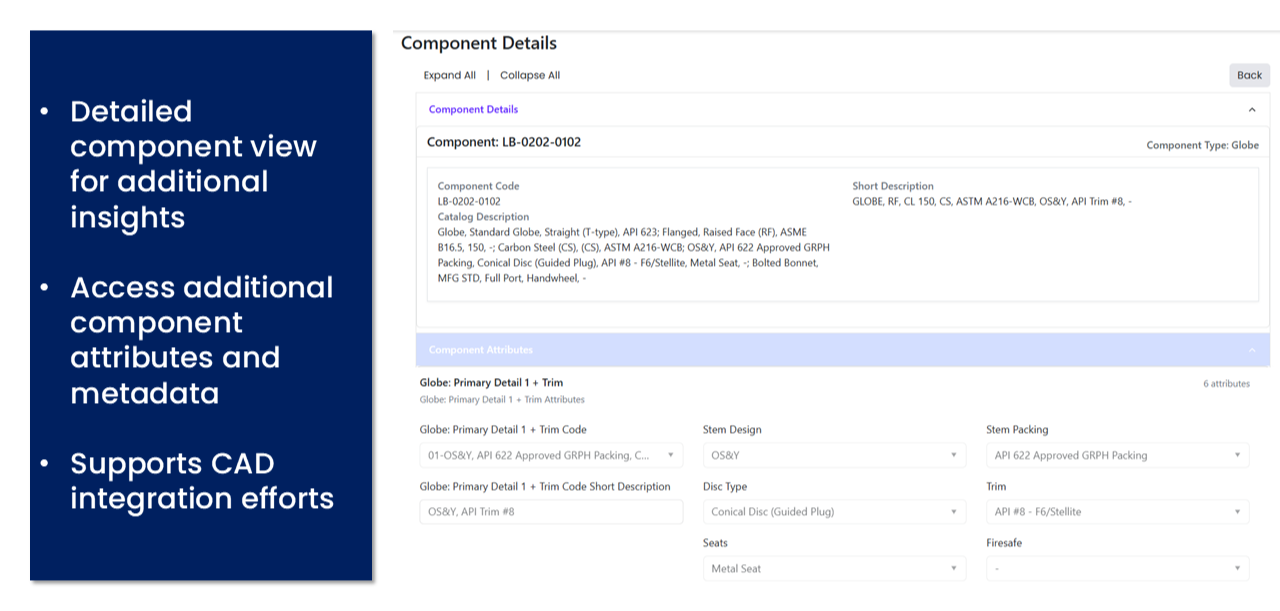
Figure 4: Detailed Component View
Integrated Overlays
Multi-site organizations live in constant tension: corporate standardization vs. site reality. A data-driven approach enables site-specific overlays without multiplying Piping Spec copies – and without losing visibility into what changed, where it applies, and why.
Using Integrated Overlays, sites can layer site-specific requirements or components on top of the corporate baseline while keeping the base consistent. Just as importantly, overlays can be shown or hidden so other sites aren’t distracted by requirements that don’t apply to them – reducing confusion while maintaining governance.
On-demand metadata
Piping Specs carry a lot of “why” with each selected component in a Piping Spec; reliability learnings, corrosion realities, and acceptable substitution guardrails.
In addition to centrally managed notes, on-demand metadata makes it easier to capture and transfer that critical corporate knowledge of why certain components were included (and what was excluded as not acceptable).
Operational leverage beyond engineering
Better spare parts management
Inconsistent component definitions across file-based specs create real storeroom pain:
- Duplicate items that are functionally the same
- Confusion when a project spec uses descriptions the CMMS/material master doesn’t recognize
- Slower or incorrect replacement decisions during outages.
Centrally managed component and valve libraries support cleaner, more consistent definitions, which improves alignment to materials masters and helps reduce “we have it… but not under that name” surprises.
Negotiating power
A second, often underestimated, benefit is procurement leverage. Similar to improved spare parts management, when Piping Specs are structured and components are centrally managed, it becomes much easier to gain collection insights and garner negotiating power.
This type of reporting and visibility supports:
- Consolidating demand across projects/sites
- Negotiating better pricing through bulk/blanket agreements
- Standardizing on preferred items that are truly preferred in practice
- Reducing one-off purchases driven by inconsistent spec application
Put simply: better spec data helps you buy smarter – and often cheaper.
Proactive alignment for CAD, CMMS, and CFIHOS integration
A key advantage of digitizing Piping Specs into a centrally managed database is that you’re improving how specs are managed, but even more importantly, you’re also building the data foundation required for system-to-system integration.
CAD integration
So far, we’ve focused on how a Piping DB improves governance and day-to-day use. But for many organizations, the long-term end state is clear: Piping Specs should be consumable by 3D CAD modeling environments, not re-entered manually after the fact.
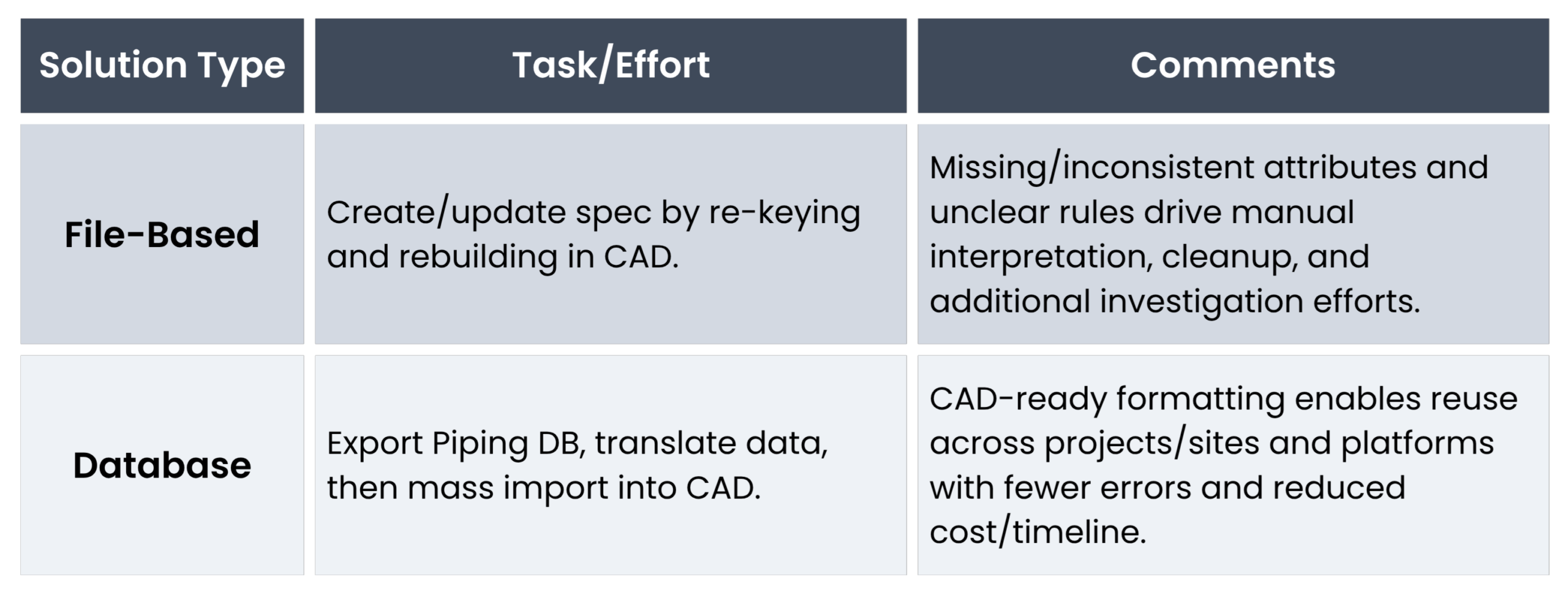
Table 2: CAD Integration – File-Based vs. Database Content Management
CMMS alignment
For CMMS and ERP platforms (including SAP and similar systems), the recurring challenge is bridging the gap between engineering intent and what the business actually buys, stocks, and maintains.
When Piping Specs are digitized as structured data, it becomes far easier to align and govern the details that drive day-to-day execution:
- Consistent component descriptions and identifiers – engineering language that maps cleanly to materials and maintenance records
- Size-specific purchasing codes – the correct item can be procured and stocked without manual interpretation
- “Preferred vs. acceptable alternate” boundaries – support faster, safer substitution decisions during outages or supply constraints.
With integrated tools, a Piping DB can support CMMS alignment by associating structured spec content to size-specific purchasing codes and enabling workflows that improve procurement and storeroom accuracy. These capabilities are only practical when the underlying catalogs and attributes are governed and consistent.
Industry momentum and parallel initiatives
The Construction Industry Institute (CII) is advancing supply chain performance through its Supply Chain Management Community for Business Advancement (SCMCBA), including a Joint Working Group (JWG) to Digitize the Valve Supply Chain. Becht is an active participant in this JWG, giving our team direct visibility into the progress and practical direction of valve supply chain digitization.
By proactively digitizing valve catalogs today, organizations are better positioned to take advantage of these emerging capabilities as they mature and become the new industry best practice.
CFIHOS alignment
IOGP’s Capital Facilities Information Handover Specification (CFIHOS) is focused on improving information handover across the project supply chain – especially at the transition from projects into operations – by making handover data and documents more consistent and easier to integrate.
In today’s environment, handover is increasingly delivered as structured databases and digital records, not binders. But integration becomes difficult when information moves between owner-operators, EPCs, suppliers, and multiple operations systems – because data often isn’t structured the same way, named consistently, or traceable across sources.
CFIHOS addresses this by providing a set of core elements, including a technical specification, a data model, and a Reference Data Library (RDL), along with guidance to support implementation. A Piping DB proactively prepares an organization for CFIHOS-style implementation by establishing:
- Consistent component definitions and attributes
- Governed applicability logic and structure
- Traceable relationships
Even before formal CFIHOS mapping, digitizing Piping Specs as structured data is a practical step toward the interoperability CFIHOS is designed to enable.
Conclusion: Why digitizing Piping Specs improves consistency and efficiency
Piping Specs are a uniquely critical part of a corporate standards collection because they sit at the intersection of engineering intent and day-to-day execution. But when a site is managing 100+ specs as legacy Excel, Word, or PDF files, the outcome is predictable: inconsistencies, missing or misapplied information, and a heavy maintenance burden that makes quality difficult to sustain.
Converting Piping Specs into a centrally managed Piping DB changes that equation. It improves efficiency by enabling controlled reuse of governed catalogs, notes, and structured attributes – while also improving quality through greater consistency and visibility across the full spec population.
Just as important, digital transformation positions organizations to capture value beyond spec management. A structured Piping DB helps future-proof the collection for stronger integration with systems like CAD and CMMS, supports evolving CFIHOS-style handover expectations, and enables practical operational gains like improved spare parts alignment and greater procurement leverage through clearer purchasing insight.
BechtPractices Piping DB brings Piping Specs into the modern standards experience developed across the BechtPractices RDMS – delivering capabilities such as dynamic spec viewing, advanced filtering, integrated overlays, and on-demand metadata to optimize how different users consume and apply specs in the real world.
Next steps
BechtPractices® is more than a platform. It’s a modern solution to better manage critical organizational data that helps engineers and managers work smarter and faster.
- Read all the blogs in this series.
- Watch the recording of our global webinar, which includes a detailed demo of BechtPractices in action.
- Request a live demo tailored to your organization’s needs by contacting Jeannie Lewis or Matt Hansen.
- Learn more about BechtPractices on our overview page.
Let BechtPractices help you unlock better performance, improved compliance, and stronger project execution – starting with how you manage your standards.
Like what you just read? Join our email list for more expert insights and industry updates.