
Where Does Artificial Intelligence Fit into Mechanical Integrity?
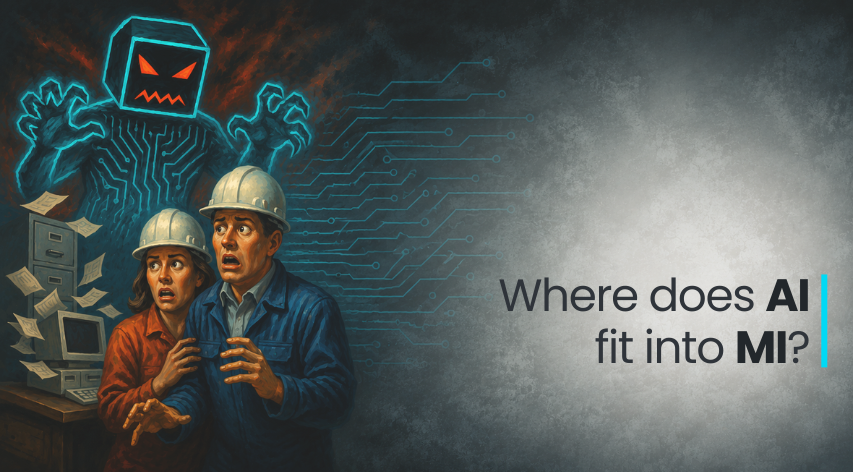
Artificial intelligence can improve efficiency in mechanical integrity programs when applied to well-defined tasks supported by reliable data. Experienced engineers remain essential for interpreting results and validating AI recommendations before they influence integrity decisions.
Key takeaways
- AI delivers the greatest value when built on reliable mechanical integrity data.
- Current AI applications improve efficiency by helping engineers organize and review information.
- Predictive failure models still face significant limitations because of data quality and uncertainty.
- Engineering oversight remains essential when interpreting AI-generated recommendations.
- Pilot projects provide a practical way to evaluate AI within an existing MI program.
Artificial intelligence is everywhere right now, and mechanical integrity hasn’t escaped the conversation. Vendors are promoting predictive failure detection alongside increasingly automated inspection strategies, making it easy to assume AI is ready to transform MI. Interest in the technology continues to grow – but so do the questions about where it can deliver meaningful value.
MI programs already generate enormous amounts of information, which creates opportunities for AI to improve efficiency. Like any engineering tool, though, AI delivers the best results when it’s built on reliable information and applied with a clear purpose. Some applications are already proving their value, while others continue to face important technical limitations. Knowing the difference can help organizations apply AI where it’s most effective.
What has to happen before AI can succeed?
The old saying “garbage in equals garbage out” still applies. Mechanical integrity systems often contain information with uncertainty that’s difficult to identify at first glance. Corrosion rate data presents additional challenges because it isn’t always reliable. AI learns from that information, so unresolved issues can carry forward into the results it produces.
Properly preparing for AI requires confidence in the available data, and engineers also need visibility into how AI reaches its conclusions so recommendations can be reviewed before they’re used to support MI decisions. Maintaining that transparency builds trust while keeping experienced engineers involved where their expertise is needed.
Where is AI already delivering value?
Some of the most successful AI applications focus on improving efficiency while supporting the work engineers and inspectors already do. Current examples include:
- Making historical engineering documents more accessible. AI-powered optical character recognition can convert scanned documents into searchable, machine-readable information.
- Reviewing inspection reports more efficiently. Large language models can help inspectors work through inspection reports more efficiently. They’re capable of identifying findings that deserve additional review and reducing the effort required to prepare report templates.
- Improving access to technical knowledge. AI systems trained on trusted engineering references can support users in locating relevant technical information and explain how they arrived at their recommendations. Of course, those outputs still need to be verified before they’re applied in practice.
Where should engineers remain cautious?
Some of the AI applications receiving the most attention still face important limitations. For example, predictive failure models depend on information that often isn’t complete enough to support reliable predictions because wall loss can occur in short, episodic events that aren’t always captured in routine process data. Experienced engineers are still needed to interpret those results within the context of actual plant operations.
Autonomous risk-based inspection presents many of the same challenges. Historical inspection data doesn’t always capture the assumptions or engineering rationale behind previous decisions, making it difficult for AI to interpret inspection priorities without additional context. Adaptive integrity operating windows also require relationships that are best established through engineering expertise instead of machine learning alone.
For now, AI is best suited to supporting engineering decisions. Experienced inspectors and engineers remain essential because they provide the judgment needed to interpret AI outputs within the context of actual plant operations.
How should facilities get started?
Organizations evaluating AI should begin with a focused pilot project. A well-defined pilot provides an opportunity to verify results while gaining experience with how AI performs within an existing mechanical integrity program.
Successful implementation also depends on maintaining transparency throughout the project. Clear visibility into how AI reaches its conclusions helps organizations build confidence as they expand into future applications.
Finding the right role for AI
Artificial intelligence will continue to evolve, and so will its role in mechanical integrity. The greatest opportunity lies in applying AI where it improves efficiency while supporting the engineering practices already in place. Organizations that begin with practical applications and maintain experienced oversight will be well positioned as AI capabilities continue to mature.
For a more in-depth look at where AI can provide practical value within an MI program, read the full article in Inspectioneering Journal: Artificial Intelligence and Mechanical Integrity: Where Does AI Fit into MI?
Every facility has different priorities. Contact Becht to discuss how AI can be applied in ways that support your existing inspection and reliability efforts.
Like what you just read? Join our email list for more expert insights and industry updates.