Why Use API 653 for Aboveground Storage Tank Integrity?
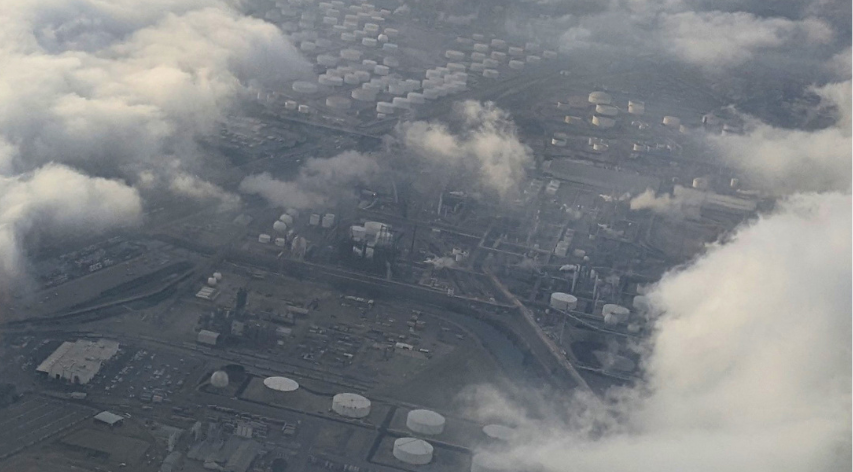
API 653 has become the industry standard for inspecting, repairing, altering, and reconstructing aboveground welded steel storage tanks. While many owner-operators use it to meet regulatory requirements, its value goes far beyond compliance. The standard provides a common framework for evaluating steel tank integrity and making informed decisions about repairs and continued service.
Key takeaways
- API 653 provides a standardized framework for evaluating the integrity of aboveground welded steel storage tanks.
- Storage tanks degrade over time and require periodic inspection to manage integrity risks.
- API 653 helps owners determine appropriate inspection intervals based on tank condition.
- The standard supports informed decisions about repairs and continued operation.
- API 653 is used in petroleum storage but also across many other industries.
My story: How I learned the importance of API 653
Having spent much of my career working with storage tanks, I’ve seen firsthand why API 653 became the benchmark for tank integrity programs and why its principles remain relevant across a wide range of industries.
When I was a young engineer fresh out of college, it was 2009. I got a great job offer straight into the tank integrity group of a major oil company. Did I know anything about tanks? Big round things that hold stuff. That was about it.
In 2009, API 653 had just released the 4th Edition, and the standard had been around for nearly 20 years. Since the maximum inspection interval was 20 years in early editions, this means that when I started out, most of the tanks had already been previously inspected to API 653. As far as I knew, it was the only way to inspect and repair tanks.
As I grew in my career as a tank engineer in the petroleum industry, I started learning more about the history of tanks, inspections, and repairs by going through inconsistent and incomplete records that existed from before the 1990s. I also heard many stories of how inspections and repairs were performed from the contractors and engineers who had been in the industry for some time. Sadly, this included being introduced to some of the failures that led to the development of API 653 and why it became mandatory in many regulatory jurisdictions.
I have been fortunate to learn from some of the earliest API 653 inspectors, including those that drafted the standard. I took the test and achieved my API 653 certification in 2011. Fast forward to today, and I am now part of the API subcommittee on aboveground storage tanks (SCAST) that continues to develop this standard and other tank documents.
Why tank integrity matters
Working in tank integrity taught me that storage tanks may look permanent, but they do not last forever. Besides holding liquid, they represent significant value through the product stored, the operations they support, and the trust of the surrounding community. Failures can also result in significant monetary costs, especially when cleanup is involved or operations are disrupted. Beyond accounting, failures can have significant impacts on people, the environment, and public relations. Although inspection and maintenance are major expenses for most owners, unexpected integrity problems can create financial burdens that far outweigh the investment required for a well-managed program.
The reality of tank degradation
Unfortunately, the idea “well, something survived once, so it will be fine today” continues to persist, even though it’s been proven wrong time and time again.
Everything has a service life. The structure of your tank can degrade based on corrosion, foundation settlement, service induced loads, weather, seismic events, mechanical impacts, fires, and other damage mechanisms. Historically, most tanks nearing the end of their lives give plenty of warning and decline with slow leaks and visual signs of damage. However, the worst tank disasters have happened suddenly and without warning. These failures also tend to happen when the tank is nearly full, so the damage can be extensive.
API 653 helps provide guidance for determining remaining life, safe operating limits, and appropriate safety factors. But it’s not perfect, and owner/operators need to use discretion in deciding when to:
- Provide more safety margin
- Use shorter inspection and maintenance intervals
- Limit the use of a tank
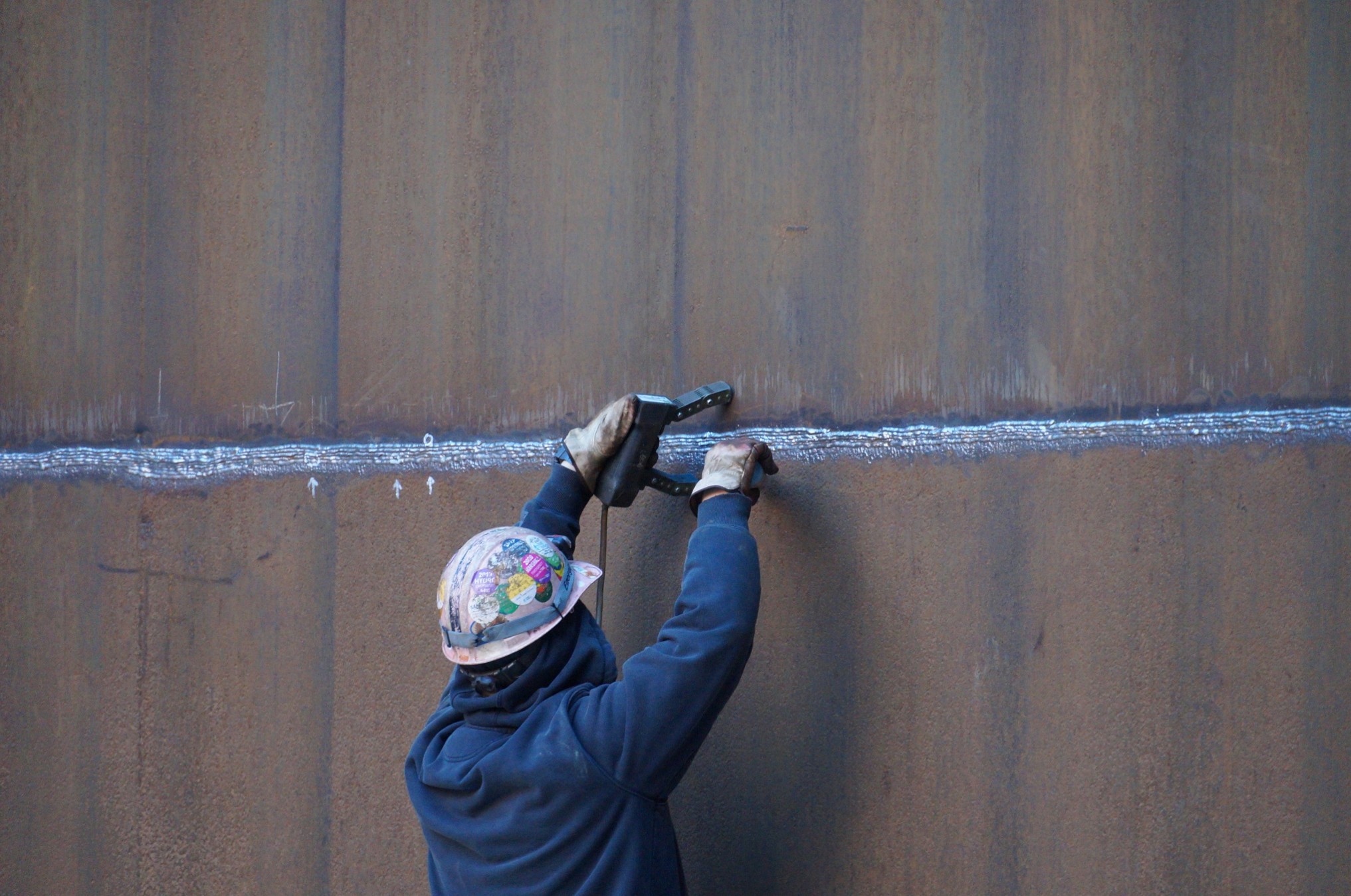
Figure 1: Magnetic Particle testing (MT) of horizontal shell welds
Why use API 653?
It could be that as an owner/operator you’re required to use 653, in which case you definitely should. Most of the US and many other regions have requirements to inspect and repair certain tanks to API 653. Due to the nature of regulations, sometimes a specific edition, only certain sections, or exclusions are specified. But for the most part, the fundamentals of the inspection intervals and repair requirements are consistent.
If you’ve got tanks built to API 650 or older ones to API 12C or 12A, you should probably be using API 653 as it’s specifically tailored to these designs. The 6th Edition will be published soon, and I recommend using the latest edition unless required to follow an older version. However, inspectors should be familiar with the most up-to-date standards and apply the more conservative interpretation as appropriate.
But it goes beyond compliance. Even if not pushed into it by regulation, using API 653 allows you to take advantage of an industry of experts and be able to make rational decisions that are defensible. Integrity engineers shouldn’t be out on their own trying to determine fitness for service and inspection schedules. Using a published standard allows an owner to have a common language and specifications to use for inspectors, engineers, contractors, regulators, insurers, and leadership.
API 653 protects owners, operators, contractors, and the public by ensuring that tanks are inspected and repaired to avoid failures that have occurred in the past. Using a credentialed inspector ensures a minimum competence and scope specifically for welded steel tanks.
And API 653 should be considered the floor, not the ceiling. Doing the bare minimum may keep you out of trouble with regulators, but safety concerns and environmental risks should be considered for additional scrutiny of tanks and repairs beyond the baseline to ensure tank reliability.
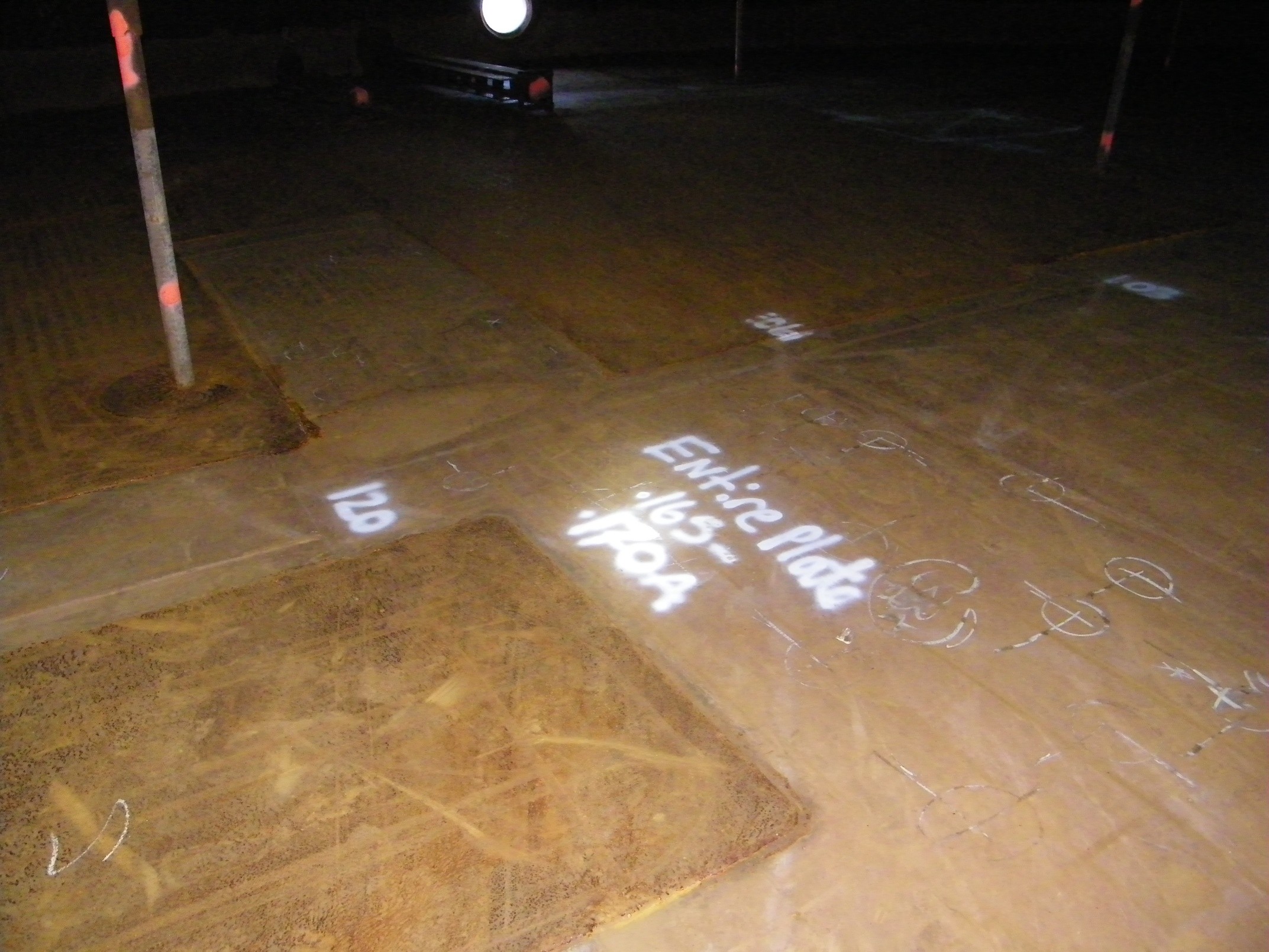
Figure 2: Internal Magnetic Flux Leakage (MFL) scan indications with ultrasonic (UT) prove-ups on a tank bottom
But I’m not storing oil: API 653 beyond petroleum
While API 12 series and now 650 were specifically designed for petroleum storage, they are also used for “other liquid products.” Large, welded steel tanks are very common across many industries, including petroleum, chemical, manufacturing, fertilizer, mining, and water. They store a wide range of liquids at differing temperatures. Very little in the API tank standards is specific to hydrocarbons, and the engineering principles are applicable regardless of the liquid stored. Other design standards such as AWWA have similar methodologies, but there aren’t many other inspection and repair standards.
Most of the regulatory requirements to use API 653 are based on petroleum environmental risks such as contamination of groundwater, surface streams, or air emissions. Because of this, many other tank applications aren’t required to have inspections and repairs to 653 – if there are even any requirements at all. Yet one of the most well-known early tank failures was of a molasses tank. Molasses isn’t particularly hazardous on its own, but when you have 2.3 million gallons of it, it can become a very destructive force.
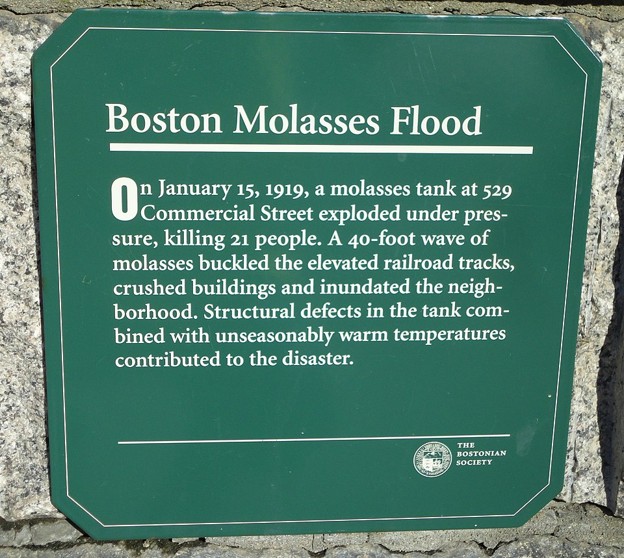
Figure 3: Boston Molasses Flood memorial sign
Understanding the risks of tank failure
Stored contents have varying hazards associated with them, typically expressed using an NFPA diamond or similar. These hazards are a large consideration in emergency response plans and operating permits. However, often overlooked is the potential energy of a full storage tank by itself. A tank that fails catastrophically can cause severe damage to its surroundings, even if it’s just storing drinking water. A 40+ foot tall wall of water is a destructive force, and most secondary containment walls won’t stop it or even slow it down. A failed tank can sweep away vehicles like toys, cause structural damage to surrounding tanks and buildings, and scour the ground – all before the hazardous effects of the stored products even become a factor.
One of the most severe tank failures was in 1988 at an Ashland terminal outside of Pittsburgh. This diesel tank failed under brittle fracture during its initial fill after reconstruction and became a primary reason API 653 was developed and made a requirement. For more information about that failure, see NIST Report NBSIR 88-3792.
This is why hydrostatic testing of tanks isn’t a risk-free event. They are, in essence, destructive tests. Fabricators and repair contractors should be certain the tank will not fail before they start filling it. As a result, there are stringent engineering and testing requirements in API 653 to avoid hydrotests and go straight to filling with product. Owners should take these risks into consideration when signing off on an exemption or approving a hydrotesting plan.
Limitations of API 653
API 653 is primarily focused on the shell and bottom integrity. Its objective is to keep the liquid in the tank. However, some operational and environmental concerns aren’t fully addressed in the standard, including:
- Air emissions
- Operating practices
- Product quality
- Safety of personnel
While API and other organizations publish standards and procedures that cover these topics, gaps still exist. It is imperative to have or hire expertise in tanks when developing and implementing integrity plans to ensure all areas of integrity are covered.
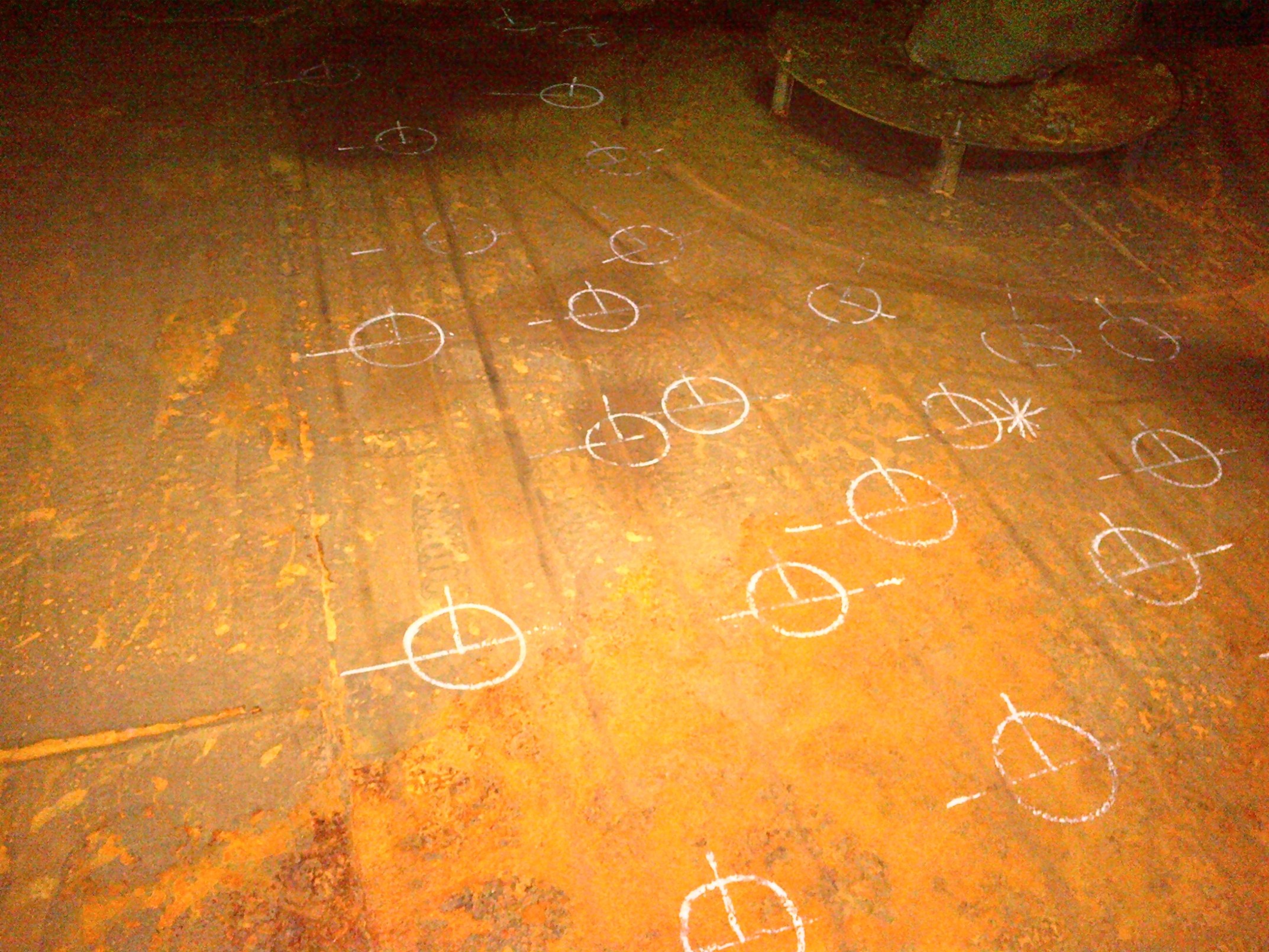
Figure 4: Internal Magnetic Flux Leakage (MFL) scan indications on a tank bottom
Alternatives to API 653
If you aren’t required to use API 653, you should still be using something to guide your inspection and maintenance practices of steel tanks. For small tanks, this might be a standard applicable to shop-fabricated tanks like STI SP001. Outside of the US, a standard like EEMUA 159 may be used instead. Some jurisdictions have specific rules and requirements for storage tanks that may or may not reference an industry standard. In rare cases, a specifically engineered inspection and maintenance plan could be implemented.
Conclusion
Tank integrity programs should include experts that can apply the engineering principles, the inspection methods, and a risk analysis for all tanks – no matter the size of the tank or the product stored. API 653 represents the best standard for inspection and repairs of steel tanks across many industries, and its use should be considered the minimum for safe tank operations.
Whether you’re required to follow API 653 or simply want greater confidence in your tank integrity program, Becht’s storage tank experts can help you understand your risks and determine the most appropriate path forward. Reach out anytime.
Like what you just read? Join our email list for more expert insights and industry updates.